Author: Sonja

Sixty-five years and counting poetically so

Those of you who follow both this and my HuffPost blog will know that I’ve been grappling with loss here lately. My father-in-law died back in March and just four months later, his bride of 65 years has followed, my husband’s mother.

Normally, that’s the way it happens I have been told repeatedly–one lifelong partner so mourns the loss of the other that the heart pines until it stops altogether. If I didn’t see it for myself, I’d insist that it was a historical tragedy of some sorts.

But it was not a play, it was Peta’s life, but no less dramatic, particularly her final days. The very thing that was so wrong about her suffering was the thing that was so right about it–she simply couldn’t get accustomed to life without her husband.

And why should she at 96. Never mind that those of us who cared about her did everything in our power to help her overcome, which is a good segue to the National Health Service  (NHS).

Hailing from a country that seems to pooh-pooh any healthcare package that reaches out to the masses, I’ve never fully embraced the NHS for a number of reasons (it’s often confused with Welfare, scorned for inadequate treatment, spurned for inconsistency in doctors, and so on) but having witnessed it firsthand for weeks now, I have opened my arms to it, that is so long as the communication is effective.

Admittedly, however, that is not always the case. Communications is fair at its best in the NHS. During my mother-in-law’s stay in hospital, I had to assert myself more times than not owing to inadequate communications. Still barring the frustrating times, I saw that the NHS can work, but of course, all GPs and hospitals are not equal, as is often pointed out in the news. Recently, I read of a south London hospital that failed a dehydration patient, mainly down to poor communication.

In the case of my mother-in-law, however, the NHS hospital and the surgery (doctor’s office) both succeeded but they shall remain nameless to spare them the big head. Of course, there were a few surly employees and at least one or two incompetent ones, but one or two bad apples don’t spoil the whole barrel.

When it came down to it, the NHS worked for Peta when she needed healthcare the most. When the medics thought she could be saved, they worked with us to save her. And when it became clear that she was beyond rescuing, they worked with us to make her as comfortable as possible.

Admittedly, the best part was avoiding red tape for the most part. Okay, there was some…okay a lot, but the point is there was no haggling with insurance companies, etc…And though I did miss the continuity of doctors, I saw the merit in a system that levels the playing field when it counts the most.

Though we could have opted for private care and in some instances we did, Peta, like many Britons, paid into the healthcare system via her taxes, and it paid off for her. And though the NHS is available to anyone in the country, not just those paying taxes,  it’s still different from Welfare in that it is not a government provision, rather a system implemented by the government that can and does work more often than not.

As for Peta, though we already miss her sorely, we take comfort in knowing that her ending was rather poetic, much like hers and Joe’s life together–65 years and counting. Beautiful – yes, that sums it up.

No rain, no wind can stop the heat of London

June 11, 2012 – If you are in London today, my advice is to stay in, unless you really have to go out!

I know, I know, that’s not sound advice for tourism, coming from one of the capital’s biggest fans. Sorry but the rain is dogged and wet and cold, so much so that I cannot think of another thing to write about this week. Honestly.

All I can think is that I hope the rain, as soft as it is, doesn’t carry on for Wimbledon, for the Olympics, heck for summer.

But what if it does? We can’t stay in all summer. Some people have to get out to work, albeit I can stay here and work, and God knows I have plenty to do. But I do have things to do outside you know such as getting to the hair salon.

And as the famous Ain’t No Mountain High Enough lyrics go: “No wind no rain or winters cold can stop me baby.”

Call me conceited, but this is a proven fact. I went this morning.

So why am I telling you to give up your holiday for the rain. You came here to play. After all, London is one of the world’s greatest cities. Apologies, I stand corrected. Tourists and Londoners alike get out and enjoy the capital.

Here are the top five things (in my view) to do when the rain won’t go away:

  • Get thee to the Tate Modern. You can spend the day there browsing from floor to the floor and when you’ve had enough, check out one of the cafes or the restaurant on Level 7.  Even if you don’t dine there, you can see one of the best views in London, including the Millennium Bridge and St. Paul’s Cathedral. And when the rain lets up, make your way across the bridge to St. Paul’s.
  • If you don’t want to venture as far as the South Bank, get thee to South Kensington and enjoy the museums, all of them–the V & A, the Science Museum, and the Natural History Museum–if you can squeeze them in. And somewhere in between have a bite to eat at one of the trendy restaurants in the area.  I can highly recommend the Hummingbird Bakery for the world’s best cupcakes. Not a meal but some have been known to make a meal out of the carrot cake cupcakes.
  • If you’re sixteen and you think art galleries and museums are for your parents, get thee to Westfield Shopping Centre in Shepherd’s Bush. It’s all there, but you’ll need plenty of dosh for this upscale haunt. So drag your parents along if you can. If you can’t, well, never mind! Go anyhow. Also, Westfield has a centre in Stratford, near the Olympic Village.
  • Don’t really want a mall, can get that at home, so you want something indigenous to London–Harrods! Yes get thee to the celebrated British department store, located in the heart of Knightsbridge. You could spend the day there, browsing and gawking. And when you’ve had enough, take your pick of restaurant or café right there.
  • Exhausted now… Get thee to a spa for a pedicure, manicure, or facial, whatever you fancy. My favourite at the moment is Hush on Pimlico Road. Ask for Cindy for the world’s best manicure.

Anyhow, whatever you do, kit out in a good rain coat, rain hat and umbrella. If you don’t, you might need a good hair salon and I know just the one — the Award Winning Junior Green in Knightsbridge. If you can, see one of the owners Joy or Junior. If not, any stylist there will do. Promise!

There, all dry and comfy now and feeling the heat again. Umm, maybe the warmth will have to do.


Writing on the Wall, Another Option

After a long grueling weekend of reading my 300 page plus manuscript one last time, I hit a wall last night. Not now I thought, having only implemented changes, albeit minor, up to page fifty-seven.

“I cannot miss this deadline,” I told myself. “I’ve already begged for forgiveness once and with good reason, but this time I don’t have any real excuses, do I?”

Then, I remembered that there is one whopper of a change in the next chapter. Maybe that’s what’s behind the wall.

Thus, I tweeted: what does a writer on deadline do when she’s hit a wall? a) climb over it; b) drill a hole through it; c) collapse in front of it.

Not a blinking soul out there advised me, so left to my own devices, I took matters into my own hands. But for the life of me I couldn’t climb over it, couldn’t get even a tiddly hole through it and unfortunately,  I did collapse in front of it, so to speak, at least until about an hour ago.

Around 6:00 a.m., I woke to the alarm of my Blackberry with good intention, so I thought until I stood. Oops – an ear imbalance, vertigo, something off putting, whatever.  Back to bed I went, remembering when I was a young reporter facing a similar problem, I would get ill. Then it was a migraine. But you know what, I overcame somehow.

I wrote on the wall. Ah ha! That’s what I’m going to do today, which is why this blog has to end here. Deadline and wall are staring me in the face.  Better get writing.

With a bit of luck, I’ll bring you my regular blog tomorrow. Can’t wait to brag about my new Ipad. Our secret is out.

Sixty Years On: How is Afro Hair in UK?

Today, the Queen marks the 60th Anniversary of her accession to the throne. On February 6, 1952, the young princess would suffer the loss of her 56-year-old father and find herself wearing the mantle of England’s highest public servant at the tender age of 25.

As I watched the footage of a poised young woman with coiffed hair, the epitome of an English woman’s hairstyle in 1952, I wondered about the hair of the women who had migrated from the Caribbean to England. Was professional hair care available to them?

According to the Moving Here website, which looks at a history of migration, it was difficult for a black woman to maintain her hair in the UK in the 50s. Unfortunately, this meant many women cut their hair off or ended up doing it at home, not necessarily caring for it properly.

When Beryl Gittens, a trained hairdresser, planned her journey to Britain from Guyana, her uncle advised her to ‘walk with her pressing comb’. Good thing she took heed because when she arrived she found virtually nowhere to get her hair done.

The Trinidadian pianist, Winifred Atwell, established a salon in Brixton in the late 50s to train English women how to style black hair. And in 1962, Mrs Gittens opened a salon on Streatham High Street, one of the first black hairdressers in London, Beryl’s Hairdressing Salon.

Fast forward forty something years when I relocated to London in 1998, though the situation had improved greatly, I moved from salon to salon, feeling a bit peculiar, as people explained that they didn’t know how to do my kind of hair. And when they did, they seemed to have outdated ideas about how much oil to put in it, for example.

It took me a few years to land safely with Joy Miller, co-owner of the award winning Junior Green Afro Hair Salon in Knightsbridge. A leader in Afro hair care, the trendy salon serves clients from all over the UK and from Europe and other countries. Although such salons are not necessarily rare anymore, they don’t come a dime a dozen like their European competitors.

New comers or business women can still find themselves in a pinch, depending on where they live. Many drive a couple of hours to London to visit a salon. One woman who lives in Berkshire told me she used to drive hours to Birmingham every two weeks to get her hair done, but now she comes to London instead. Another came up from Exeter to Bristol.

Why? What’s hair got to do with it? Everything! I believe it can be a woman’s greatest expression of her personal style, though some of the choices we make about our hair are subjected to political scrutiny. The truth is most of our choices, if not all of them, come down to practicality.

For instance, most of us straighten our hair to make it more manageable! Not to look and behave more European, whatever the political hype suggests. Case and point: there is a trend towards natural hair nowadays, but still women are blow drying their tresses to keep it doable.

And others of us wear extensions because they are lower maintenance. Still, some like braids because not only do they look good, but also they allow for complete hair freedom. It’s nothing to do with being overly ethnic. I know; I just ended a six-month period of braids. I absolutely loved the braids and am equally as hyped about returning to my softly relaxed hair.

As I said it’s a personal expression, nothing more, nothing less. And personally, I’m just hyped that the Afro Hair industry in the UK has come such a long way since 1952. Long may it grow!

Two more days to snag first edition novel

You might recall that mine was a big decision to independently publish The Barrenness. A writer friend reminded me a few weeks ago that the idea of self-publishing intimidated the daylights out of me.

But true to my determined nature, even if it did take me years to get around to it, I found the courage to take the plunge and set-up Prymus Publications. And once I dived in, I gained high hopes, despite all the doom and gloom around the publishing industry–publishers collapsing, book stores closing left and right, and e-books bridging any gaps that came open.

The latter, of course, created opportunities for self-publishers. But I still had to think about the stigmas associated with it, hence some of my turmoil. Now a few months just short of a year since the novel was released, I can’t say I am totally at peace but I am happy to have immersed myself into this project.

Maybe I still haven’t learned how to swim properly, but I am floating, keeping my head above water. Basically, I had three major goals in publishing: to get the novel published (including writing, editing, design, etc…), to promote it, and to sell it.

The first one I achieved on target, thanks to a fantastic team including my editor and designer and of course, printer/distributor. The latter two–promoting and selling–are ongoing, and I must say that while I’m still expecting sales to surprise me any day now, I am delighted with the results of press coverage. In this area, I am a pretty good swimmer.

Since last April 2011, The Barrenness has been featured in some forty media outlets, most of them listed on my website. Still there are others in the making, including FOX News and ARUN, a national radio network in the US. In addition, there are many copies of the novel out there that still might be reviewed. Let’s hope so. In the meantime, here are some highlights:

CNN with Pam Oliver, as well as The Tom Joyner Morning Show, ABC Let’s Talk Live, CBS This Morning, Saturday Mornings with Joy Keys, The Toronto Star, and The Voice.

Many thanks to the media in the US, in particular, for supporting the changing face of publishing and covering vibrant, new voices, even when they don’t come from one of the big houses.

And in general, thanks to all outlets who gave The Barrenness some quality time, including my hometown television station and newspaper in Albany, Georgia. The biggest thanks, of course, goes to Janet Shapiro of Smith Publicity. She’s the one who totally immersed herself. What a star?

Now, back to this countdown–just two more days left to secure the first edition this debut novel! In the meantime, I absolutely must learn how to swim, properly.

Fast Track: London to Paris or vice versa

Whether the city of lights has more character than the big smoke is debatable if you ask me. While the former has an unmistakable youthful buzz that seduces anyone who comes near it, the latter has an indisputable sophistication yet a mellow politeness that draws its visitors back time and again.

Ask anyone for directions in London and you will soon be on your merry way. Not in Paris. You’ll be spinning around in circles until you figure it out yourself. Better take along a compass and a translator for that matter. And forget securing a taxi, but even if you do, be prepared to feel unwanted the entire ride.

Still, if you ask my godson, he’ll tell you there is no contest. Paris has it! While I don’t agree, even I have to admit that Paris is everything youthful, even its older attractions, the Sacré-Cœur and Notre Dame, for instance, still seem to be in their prime.

No wonder so many writers, particularly American ones, have flocked there. Gertrude Stein, Ernest Hemingway, Richard Wright, Ezra Pound and James Baldwin all spent extensive time there. Wright even gained French citizenship and moved his family there permanently.

In Michel Fabre’s book From Harlem to Paris, Wright is quoted as saying, “Can you imagine what this means to me? I never knew a city could be so beautiful.”

So it is. Paris is a beauty. And no matter how many times I go there, I too am lured to the left bank where Wright and others lived and worked. And repeatedly, as I looked around Paris, wherever I was, I saw a grand building or monument and was reminded of the words that my husband’s childhood French friend coined when he was a first time tourist in London.

Of St. Paul’s, Westminster Abbey, even the Tower of London, he said, “we have this in Paris but only bigger.”

He has a point. Even the gardens (jardins as they call them) are sprawling.You don’t have to go to Versailles for this. We found a vast, beautifully manicured landscape on the left bank. But still the debate goes on. London’s Hyde Park is not to be sneezed at.

Lots of differences between the two places, no doubt, but there is one particular that connects them from centre to centre–Eurostar, the high speed passenger train.

Arguably, it is the best mode of transport operating between the two. From St Pancras to Gare du Nord, it takes two hours and twenty minutes flat. This is better than flying by a long shot even if you are averse to the tunnel under the English Channel. This part of the journey only last for 30 minutes.

Well worth shutting your eyes and forgetting where you are for it is the tunnel that enables travellers to strip out the hassle that comes with air travel and cut back on the expense and time it takes to reach city center from an airport.

At your point of origination, you go through immigrations, passport control, and security and wait briefly in the Eurostar lounge–London definitely the better of the two. At your destination, you stroll pass a few officials without further delay.

But first you do need to board the train and take the journey. Now you get what you paid for: a reserved seat, comfy enough, even in coach. But don’t expect excess on Eurostar. It’s all basic, particularly the food, unless you bring your own.

Anyhow, who needs food when you’re on the fast track? Best to save your appetite for city center—London or Paris. You choose or do both.

Magic or hard-work – I’ll take it

Many writers don’t read fiction while writing it, including yours truly. It’s risky business, akin to rolling a two-sided dice—one will make you rich, the other poor, very poor. No wonder I am voraciously reading my fourth novel in as many months or less as well as a couple of short stories.

I do have to get writing again, working on my second novel that is. Admittedly, however,  I am a bit up in arms about what’s next.  If you’d asked me a month ago, I would have told you The Blindsided Prophet; I started it. I really did but the process got  interrupted, and when this happens, you’re back to the drawing board.

So I am  and interestingly enough, readers are encouraging me to take a page fromThe Barrenness—explore some of the minor themes,  the characters. Naturally, I am carefully considering the feedback. But I am getting edgy.

Going without writing fiction for too long stresses me out and knots up my muscles.  I’m not sure that my right ‘rotator cuff’ muscles would have any flexibility were it not for my monthly short stories and of course, the ayurvedic massage I had on Friday.

What a difference unblocking energy makes, though such massages are not meant for those with low-pain thresholds, but what can I say I did it. When I’m back in London I’ll tell you all about this experience, particularly the aftermath. I was so relaxed  yesterday I had to take a cat nap before I could pack.

A good segue for me to tell you why I’m not sitting at my desk or on my floor in front of the fireplace, writing. I’m in the US yet  again to promote The Barrenness, thanks to my extraordinary publicist JS. Magic or is it?

Absolutely not! It takes hard-work from both publicist and writer,  hers spilling over into the late nights and weekends and mine going into fifth gear about now as I write this blog with unsteady hands and droopy eyelids. Only landed a few hours ago, and at 8.00 EST tomorrow morning, I call in to a television station in up-state New York.

What do you mean I should be in the studio. No  can do, I am in Georgia for another television taping to be aired in a couple weeks and a radio interview Tuesday  morning. Then I travel up the Eastern Seaboard  for quite a few opportunities in Virginia,  DC, and Pennsylvania (Philly)—some live, some taped. Who knows where all of this might end up—New York, NY, I should hope.  Last stop before I return to London.

Debriefings will be posted here, hopefully day to day—first one tomorrow evening.  But for updates and invitations to watch or listen, check out my Facebook page: Sonja Lewis.

If you miss the tour completely, visit my press for playbacks or copies of the interviews.  If you’ve read the novel, join the discussion on what to write next. If you haven’t read it, now is the time. I’m giving away two copies on Goodreads.com.  Or buy the paperback or digital version from most online retailers.

Now where was I? What page was I on? That’s right, the Kindle doesn’t do page numbers. Never mind, I’m enjoying this fantastic novel all the same and hope to finish it before the writing (well the researching, thinking, planning) begins. If not, I’ll just have to roll the two-sided dice.  Wish me magic? Okay, more opportunities for hard work. I’ll take it!

The Children of Mrs Big

From now on, I am calling China Mrs. Big. Most of us saw her larger than life Olympic opening ceremony, if only in part. A scene was enough to get the gist of her scope.

Still, I thought the grandiosity was a short lived façade. No sir re, as my great grandfather used to say, it is real: millions of patriotic people, thousands of ancient relics, hundreds of traditions and a few modern innovations (just a few) make up today’s definitive Chinese culture.

But since you can read about the Great Wall and all that stuff any time, I am not going to write about it.

Admittedly, however, there is nothing like being there. Go if you can, if you can’t buy a good book.

In the meantime, let’s talk about her children, the people. When I say millions, I mean millions. There are some 32 million in Chongqing’s Administrative Area, a place I had never heard of before visiting their kiosk at Expo 2010 in Shanghai, which has a population of nearly 19 million itself. And there is another 17 million in Beijing and so on.

If you are still not impressed, consider that Mrs. Big has four times more children than Mrs. Liberty (USA), who has about 309 million off springs.

What does this mean? Any sociologist worth her salts can pontificate this matter, but since I am not one, I won’t try it. But I will give you my general impressions: controlled, cooperative, casual, curious and courageous.

Suggesting that the Chinese are totally controlled is misleading, but they do respond to a different kind of governance than most, particularly Western countries. For example, they don’t flap about giving up their home for the progression of the country. We were told many times of the government taking over land and re-housing people to build up an area. No problem mate!

Talk about cooperative, check out what happened on a tour boat when a German tourist delayed the tour because one person from his group was missing. So it was the husband of a dismayed middle aged woman. He had her passport. The officials detained the boat to the dislike of the rest of us. Let’s face it that does not happen in Germany, England, the USA or any other western country. Okay!

In a chaotic scene in the airport, casualness did not go unnoticed as the people skipped cues (cut in lines), talked boisterously, an inherent trait of Chinese crowds, but somehow accepted their fate with an uncanny calmness. Several desperate pleas – most of them met with no emotion – drew only one outburst. No, it wasn’t me.  This would not be the scene in Heathrow. But then security doesn’t stand just short of the negotiations, brandishing weapons.

Now, I don’t consider the Chinese curious because they have floor based toilets that perplex most women and offer snake wine in some modern restaurants. Not even bragging about eating anything with wings, except an airplane, and anything with four legs or no legs for that matter makes me wonder about them. But they do have a curiosity about foreigners.

Snatching a glance is an understatement, they don’t mind staring and in some instances snapping photographs. To be fair, no one took a picture of me or anyone in my group without permission. But in the confines of Expo, people did randomly snap shots of the two ladies hosting the Trinidad and Tobago exhibition. How is that for being on exhibition? They didn’t like it. I couldn’t blame them.

But they were courageous about it. Nonetheless, the best display of courage came from the Chinese, particularly in the way they hustle and in the way they drive. As for the former, they drive a hard bargain on goods from jade to tea. They work hard for their money.

And to the latter, they drive like h—l, a car, a motorcycle, even a bicycle. We had a an adventurous go at cycling, we’ll never forget it. Yet everyone else from children to the elderly seem to know how to negotiate the traffic, weaving in and out of lanes with the screaming honk of a horn and running traffic lights without wreaking havoc. Miraculously, we saw only one fender bender.

And talk about patience, sitting in traffic for hours without road rage. I will have some of that thank you, patience that is, but no thank you to the ride on the wild side. I will leave that to the children of Mrs. Big. It really works for them.

The Black Swan: a good find

It seems strange that ten years ago, I scarcely knew what a pub was, and now I live next door to one. That has it advantages and disadvantages, more of the latter for me since I am not a pub type of girl.

But I have come to appreciate pubs, the new waves ones that keep the concept of a drinking hole for the locals while introducing fine dining.

Yes fine dining. Whatever you have heard about English food, forget about it! And let me school you.

One friend came to Europe a few years ago, making London her last stop because she had heard the food was so bad. You can always find bad food—greasy fish and chips, an all day English breakfast with mushrooms, tomatoes and baked beans—and you probably don’t have to look too hard.

She didn’t but that was her choice. I am here to tell you that London and all of England offers some fantastic dining experiences.

It takes a scroll these days to list the successful English chefs; you have seen their books in your stores.  I know I have: Gary Rhodes, Jamie Oliver, Gordon Ramsay, Rick Stein and Nigella Lawson to name but a few.

With their influence on cuisine throughout the world, Great Britain has come up in the hospitality industry, offering so many delights to choose from that it is hard to say where to start.

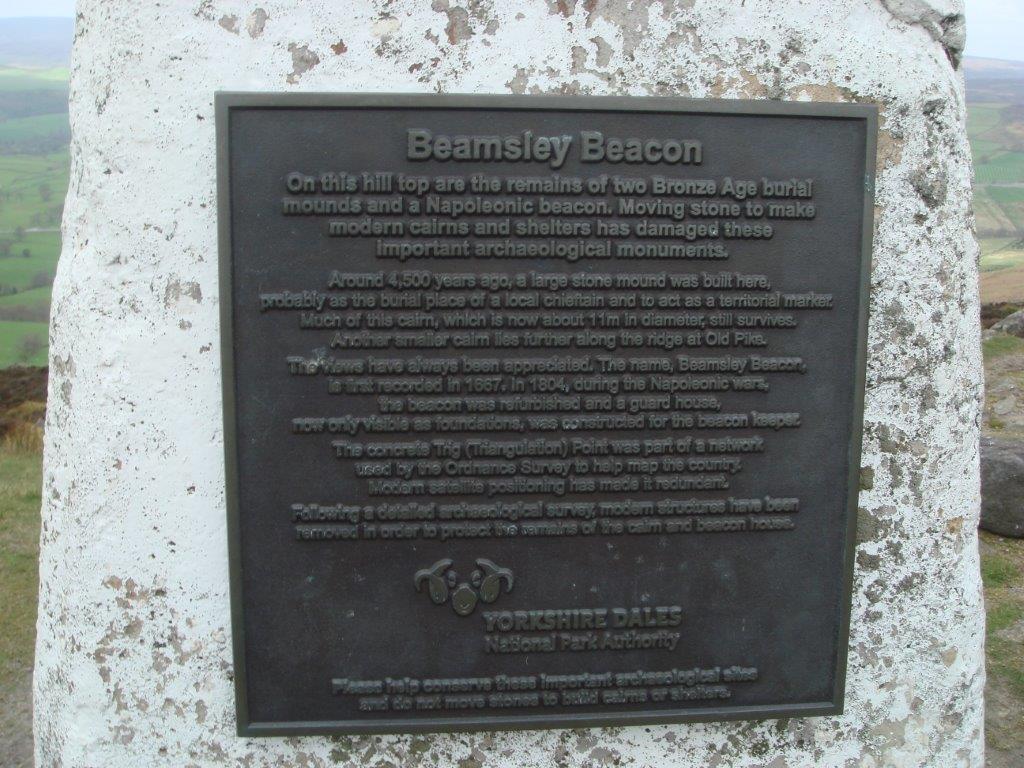
So why not go outside of London to begin and have a look into The Black Swan in Olstead, Yorkshire, a traditional pub located in a poky, quintessentially English village.

To get there, we cut across narrow roads hidden in the thickets of a rambling national park. Without the recommendation from the Square Meal guide and our GPS system, we would not have found it. But once we got there, we knew we had done the right thing in persevering.

The Black Swan makes its home in a sloping building that dates back to the 16thcentury. Though it has been renovated and added on to, the building that houses the restaurant and the bar has held onto its charm—low ceilings with dark brown beams, antique furnishing, oak floors upstairs and flagstones downstairs.

The atmosphere itself told all. We were in for a fantastic Sunday lunch, a mouth-watering tradition which normally includes some sort of roast. Paul had the traditional roast pork with all the trimmings. Good thing he had more than enough because I couldn’t keep my fork off his plate. I had fish, which was not only well presented, it was delicious. And for pudding (dessert), we both had a hot chocolate fondant.

The English like their desserts and have been often accused of indulging in sickly sweet puddings. I am one of the accusers, but here lately they have piped down the sugar and brought out the flavour. After Sunday lunch, we took our coffee in the bar area near the cosy fireplace.

Now I have to prepare you for the ending. Remember soul singer Betty Wright and her song about a young girl making love for the very first time. No, that is not the story, but the point she made was that she had to ease the song by her mother.

Try to think back to what her mother said. It was something like this to paraphrase. I like the music and the melody is so sweet, but girl I know you’re not gonna sing that song. But Betty eased it right on by her. I think I will give it a try, so you get the full picture.

Alcohol was not and is still not the done thing in the Lewis household. But these days a good meal is not the same for me without a good bottle of wine (not all by myself). And in this instance, I finished with a smooth port, watching the crackling fire. What a good find?

But don’t tell my mother.

English: A Conundrum

Next door but one simply means two doors down, so why can’t they just say that?

Still I can’t resist trying out the English vernacular on unsuspecting Americans.  “Ee by gum.” Okay that is taking it a little far, since this comes from Yorkshire meaning “Oh my gosh!” And most people outside of the region won’t have heard of such a phrase, will they?

But seriously, who’s ever heard of donkey’s years? A Chicago friend of mine still thinks I made it up.  And who chivvies someone along when you can hassle her.  And then there is, “now that is just bonkers or barmy.” What about plain old nuts? But I must confess I absolutely love whinging instead of complaining. Much stronger, wouldn’t you agree. And it sounds better.

Come to think of it, most English words just sound more refined giving them an unwarranted complexity: boot for trunk, bonnet for hood and lorry (pronounced Laurie) for truck—yes they refer to a 16 wheeler as a lorry.  Others are flat for apartment, nappy for diaper, post for mail; nought for zero, people carriers for vans, pudding for dessert and solicitor for lawyer, the list goes on.

No wonder books have to be translated.

And what tell of spelling for clarification? Amazingly, the English like to throw in vowels for special effects. For example, they write gynaecologist for gynecologist, alu-min-ium for aluminum.  And overuse the vowel “u” and virtually ignore the consonant “z” or “zed” as they say. For example, color is colour and organize is organise. But hold up, they don’t like to overuse the “s.” So they replace it with a “c” and write defence instead of defense.

And strangely, they do pronounce zebra, zedbra. On that same note they say “shedule” for schedule. We sound the word as if it is spelled sk, and they focus on the sh. Anything spelled wick is pronounced “ick”. Never mind this is another column unto itself.

Continuing on the topic of spelling, there are words with similar spellings and pronunciations, but have slightly or entirely different meanings. For instance, an infant is a baby in the US.  She can’t talk or walk. Over here, an infant could be a school child up to age seven. Also, to Americans, a billion is a thousand million. To the English, it is a million million. Who cares? Editors!

This blog entry would be incomplete without mentioning those ugly words such as learnt and spelt that look like bad grammar, but they are very real. What we Americans call the perfect tense. These are the ones I can’t bear to speak or write unless forced by an English publication.  I do have to make a living here.

However, when left to my own discretion, I avoid such conjugations by a wide margin but once slipped learnt into an email to a learned girlfriend in Atlanta, and she was appalled. I haven’t tried since, not with a fellow writer.

Sadly, I do not have the hang of English pronunciations yet. I still say Warwick, the place in Georgia, not Warick. Get over it!

But I am caught up in their spellings. You only have to look at this website for evidence. Even when I am bound to American English, such as in my novels, I write pyjamas to the horror of my American readers. And centre. No wonder this column is a bit off center.