Category: On Life

Latest Huff Post blog: Going with the crowd?

Ever went along with the crowd for the sake of keeping peace? If not, you’re in the minority. The majority, according to psychologists, follow a path that they don’t agree with at one time or another, often for fear of being socially excluded.

This concept, pluralistic ignorance, is at the centre of many historical atrocities and personal ones too. To read more about pluralistic ignorance and how to avoid it, check out my latest Huff Post blog.

Feel free to feedback and/or comment here on on the Huff Post.

Animal Instinct Determines Direction

Ever been lost and though you had either a paper or digital map in hand, you were none the wiser. I have!

For those of you who haven’t and intuitively ‘go west’ no matter the conditions or the diversions, you, my friends, actually have a functional animal instinct. Go figure!

As for the rest of us, we apparently have one too, but not so functional. In fact, ours is dysfunctional.  We must keep moving, however, even if we are way off course.

The experts say that there might be a way, moving forward, to activate this instinct.

In the meantime, check out my latest Huff Post blog to find out more about how sense of direction might be determined in the human brain and what it has to do with the big picture anyhow.

Christmas Wrapped Calmly in London

The Monday before Christmas lived up to its nickname, panic Monday, with last minute shoppers crowding the streets, despite the inclement weather.

Though my day got off to a calm start with a drive to Knightsbridge in record time under a dry, though dreary, sky, it catapulted into chaos by lunchtime with a tedious queue at Marks & Spencer’s car park in the pouring rain, the howling wind beating against the windows.

By nightfall, I wanted to cancel our trip to the theatre but nudge as I might, Paul and the folks at the Queen Elizabeth Hall (South Bank Centre), didn’t agree, so off in the scowling weather we went to see Fascinating Aida, a favourite cabaret trio.

The show went on and I am so glad it did. It was an evening of brilliantly scripted yet wild comedy that veered on the serious side now and again.

Founder of Fascinating Aida, Dillie Keene teamed up with Adele Anderson and Liza Pulman for a captivating show, which will run in London until January 10. After a short break, the trio will move on to Derby in February.

One song, though witty, reveals Adele Anderson’s touching story of making a major life change. According to Dillie, it took ten years to write the song, so complex and personal was the subject. That’s commitment if you ask me and certainly skill and talent.

Having seen the group perform at least three times, we weren’t disappointed. If anything, we were uplifted and ready to get on with celebrating Christmas, which included a fantastic celebration with family on Christmas Eve and a spectacular lunch on Christmas Day at Monkey Island, a remote island near Bray on the Thames, which happens to be home of two stunning peacocks.

That’s it, Christmas wrapped. New Year’s is up next. On that note, wishing everyone not only a happy and safe New Year’s celebration but also a wonderful 2014. In any case, do proceed calmly.

An Essay on Writing from the Deep

You write in order to change the world … if you alter, even a millimetre, the way people look at reality, then you can change it.’ James Baldwin

When I wrote The Barrenness, I hoped to start a worldwide conversation on the topic of being childfree and childless. I chose fiction not only because I love the genre, but also because I wanted the story to be any and every person’s story, not just mine. I have been delighted with all the attention around the subject, from the media and like-minded writers. Today, I get far more Google Alerts on the topic than I did six years ago. I have even participated in some research on the issue.

Writers write for a number of reasons: to entertain; to seek resolution; to change the world; to start conversations. Malcolm Gladwell, in his mid-October Goodreads chat, cited the last as a motivating factor for writing his best-selling books.

In writing my second novel, The Blindsided Prophet, I’d venture to say that my purpose was closer to Baldwin’s. I didn’t imagine that I could change the entire world, but my goal was to change the way readers think about their beliefs and values — their religion, if you will — at a deeper level. After all, believing something religiously is a cornerstone for any society, and has a profound effect on everyday living.

A few years ago, after supper at a writers’ conference, I had the ear of Jacob Ross, a brilliant and celebrated Afro-Caribbean writer, who is also my mentor. I must have been rambling about a novel I had written with church people at the centre, when Jacob popped the question: Are you deeply religious?

Having grown up as a Southern Baptist, I have always been a person of strong faith, and therefore, could have easily answered affirmatively. But taunted by internal and external misconceptions, I will never forget the rush of thoughts that passed through my head. On the one hand, some thoughts were loaded with a wariness of any and everything holier-than-thou, suggesting that admitting to deep religion would colour me as a writer. These were associated with being referred to as a ‘Holy Roller’ by the well-meaning grandmother of a dear friend.

And on the other hand, other thoughts were laden with feelings of inferiority. I thought of Baldwin’s play The Amen Corner, in which church people behave rather like most people, often hypocritically, though purposefully. Thus, I said ‘no’, quite firmly, and washed my hands of it … or so I thought.

Years later, I still cannot get my answer out of my head, and have long since realised that I wasn’t true to myself in answering Jacob.

Thus, the novel became The Blindsided Prophet, in which, as a writer, I have attempted to explore this basic question on some level, although not necessarily as a Christian, as I think its answer is important for anyone in the big scheme of life, regardless of religious association. And I firmly believe that faith underpins writing rather than dictates or restricts it. Writing is a gift to be used naturally.

Having said this, The Blindsided Prophet has been called ‘dark, psychological fiction’, which contains explicit language, abuse and sex scenes. Nonetheless, it is story about redemption. No matter how broken you are, you can be restored. This is God’s message to the people through the prophet, Isaiah Brown.

In the characters’ language and behaviour, we see their states of mind, as is often the case in fiction, but is equally as important in real life. Great men and women of the Bible had dark pasts. After committing murder, Moses lived in exile, until God liberated him and gave him the opportunity to liberate others: the people of Israel, who had been enslaved in Egypt for generations.

I am by no means comparing my novel to the Bible, but the point is this: the stories of the Bible are demonstrative of issues and struggles that seem larger than life.

Baylor University student and teacher, Alan Noble, in his Citizenship for Confusion blog said as much about the Bible, while writing about misunderstandings in J.D. Salinger’s The Catcher in the Rye: ‘… as Christians, we have a beautiful work of art filled with hard truths, ugly scenes, offensive claims, and moments of darkness at the very centre of our faith!’

In discussing this topic further with some writer friends — one is a Christian, the other is not — I was reminded of Flannery O’Connor’s views on being a Catholic author. She was clear in an article in American, in 1957, that a Christian writer’s work, like that of others, should be judged by its truthfulness and wholeness, not the writer’s faith.

O’Connor’s writing is some of the most haunting I have read, particularly the short story ‘A Good Man is hard to find’, in which an entire family is executed.

I do think she would agree that every book isn’t suitable for every audience. As for my books, they are written as adult fiction, and even so, they aren’t everyone’s cup of tea, but that doesn’t make them purposeless. Admittedly, The Blindsided Prophet may make some people uncomfortable. And some will reject it altogether.

When I first saw the film, Crash, I was shocked out of my comfort zone. I debated with anyone who wanted to, or who didn’t want to, about how dark and disturbing the film was. But soon, I realised that it was in discomfort that I found understanding of the situation.

I couldn’t relate to the movie personally, but having grown up as a black woman in the US, I found the husband-and-wife scene with Thandie Newton and Terrence Howard, in which he watches on helplessly while she is sexually exploited by a police officer, too close for comfort.

My discomfort was such a distraction that, initially, it coloured my ability to see the candour of the movie: the key messages it had to offer on social injustices and hidden racism.

In The Blindsided Prophet, this is a lesson for the character Mae Cook, who builds a fortress around the surface of her beliefs and values, steeped in convention and ceremony. She is challenged to look beyond the surface of those values, and to find out what it means to seek the truth in every situation, not just when it validates her beliefs.

Will this mean changing fundamentally? Not necessarily, but it will mean changing perspective on the fundamentals in order to accept true understanding. Isaiah talks about a New Covenant, meaning a different way of experiencing God, through one’s own freewill and mind.

In encountering this new way of thinking and of being, it is my hope that readers ofThe Blindsided Prophet, regardless of their religious beliefs, will explore the novel as a literary creation, rather than judging it against the writer’s faith, as they would any such theme underpinning a work of fiction.

So getting back to the question of why writers write: for all of the above reasons and many more. But ultimately, to tell a good story, often regardless of their own faith, but sometimes in their faith, or rather their beliefs.

In any case, Malcolm Gladwell talked about the importance of story above all else. My mentor couldn’t agree with him more. As for me, I absolutely love a good story, and when all is said and done, that is what I want to offer readers: a good story, as simple as that.

This is the real reason this writer writes.


Reinventing The Way We Use Good Thoughts

The more I think about  getting rid of bad thoughts, the more I’m convinced that this process is about reinvention, particularly when it comes to fundamentals.

How many times have you reinvented yourself, whether it had to do with career, fashion, family and so on? Sounds flippant to a certain degree, but reinvention is what we do when something becomes passe or no longer useful or beneficial.

Otherwise, we are stuck.

So why not do the same with thinking? In my latest Huffington Post blog, I take a look at moving forward, Getting With the New Programme. Another way to put it is to leave limiting thinking behind.

In doing so, we don’t abandon our fundamentals, rather we understand them more thoroughly, and use them appropriately to spring forward.

Sounds like a bit of reinvention to me. Nothing wrong with that! Happy reinvention.

Do You Have a Monster Within?

Crazy question, isn’t it? I thought so too until I got thinking about thinking rather obsessively, in the interest of researching and writing my second novel, The Blindsided Prophet.

Available now in e-book and paperback on Amazon, Barnes & Noble and most online retailers, it launches officially Monday. But what does it have to do with thinking?

A whole lot is the short answer.

Modern-day prophet Isaiah Brown thinks deeply not only for himself but also for the sake of others, too. And before it is all said and done, he proposes to leave people thinking their way out of chaos and into calm and serenity more often than not.

Deep, right! That’s why I’ve dedicated my latest Huff Post blog to mind matters, a subject so big, I simply couldn’t get it all done in one go.

Part I: Negative Thinking, Monstrously is hot off the wire. Check it out? And find out for yourself whether you have a monster within. Scary? But remember, all monsters are not created equally. Some are cute and cuddly like Cookie Monster while others are a bit grisly, if you will, like the Incredible Hulk.

Best to get to the bottom of this, but that comes in part II later this month.

For now, read with an open mind and answer the question for yourself: So, do you have a monster within? Do tell right here, on Facebook, Twitter or the Huff Post.

Expat writer, coming of age

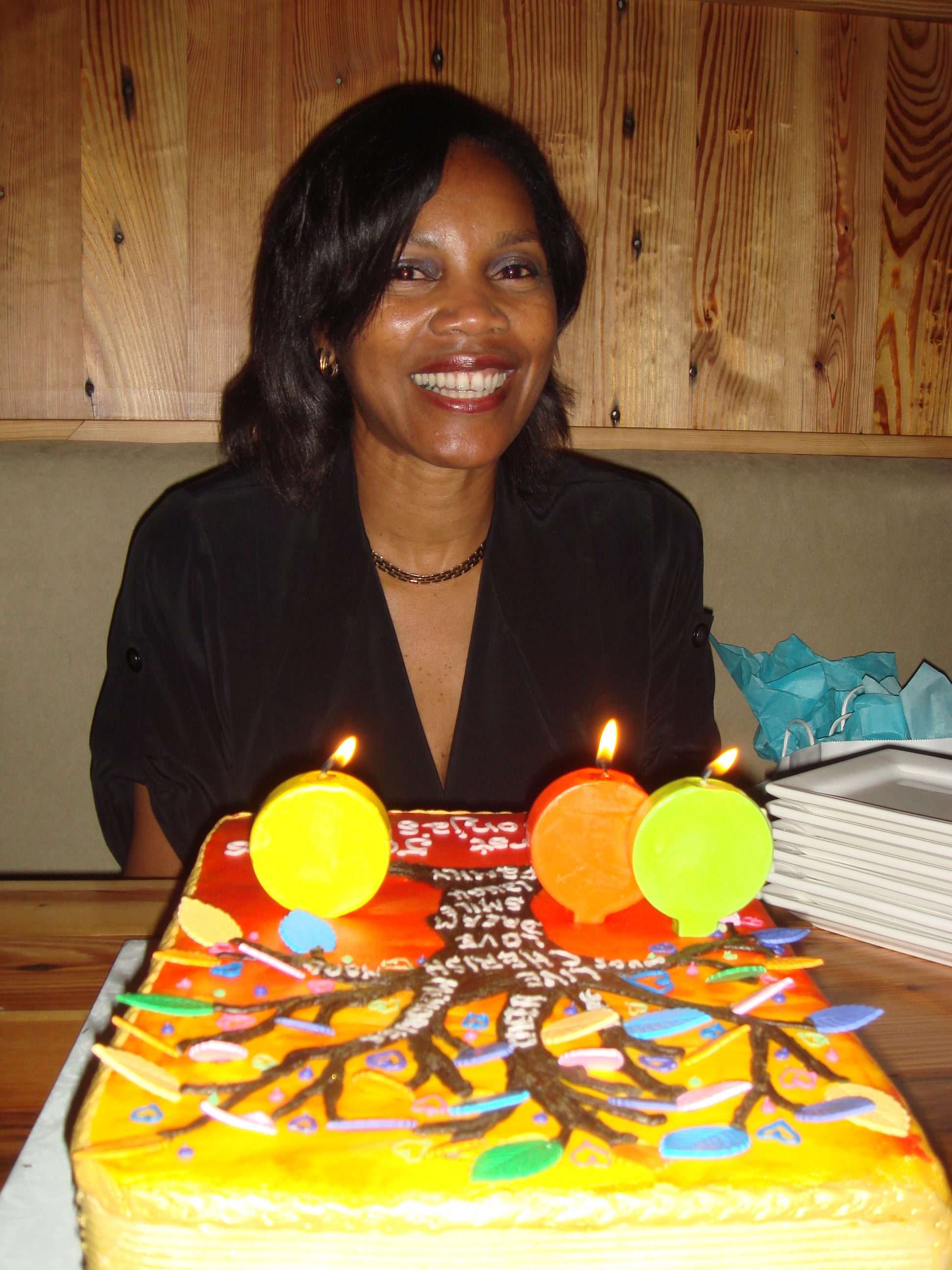
September 29, 2013 is a big day for 51-year-olds in Britain.  It is my birthday, not an occasion that I usually write about, except last year, when I turned the big 5-0. Only this year, Helen Fielding’s Bridget Jones, now this very age, makes her return to British society, very sadly as a widow but happily as a mother of two.

When I first heard this news, I took it rather badly. Not just because the charming character Mark Darcy had been killed off but also because the new much waited novel comes around the same time as my second novel.

Next week the press release goes out. Gulp!

Then in the interest of positive thinking, I thought better of the situation.  Why not celebrate the return of the 51-year-old. Everyone else is—The Sunday Times has the exclusive on it.

Interestingly enough, I’ve never thought that the clumsy but charming heroine and I were the same age and maybe we weren’t back then. I’ve always loved the idea of the books but remember much younger women than I going for the novels. I did watch the movie(s). Fun!

Anyhow, it could be that I approached the novels from a distance because I couldn’t relate—I was married when Bridget was a singleton. Now, however, we’re the same age, though she is now a widow and I am not, thank God!

I trust, however, that Bridget will deal with lots of coming of age issues and that there will be a happy ending.

And as I come of age, I mourn the loss of two acquaintances around my age, one a man and one a woman whom I knew from my childhood. Still, I’m excited about new beginnings and look forward to many happy endings.

So on this 51st birthday, I celebrate everyone who is coming of age. As the clever birthday card a certain cousin sent a few years ago said: from one hot chick to another–Happy Birthday Bridget Jones!

But if that is you too, whomever you are, whatever day you come into this age this year—Happy Birthday!

Going the six mile distance and looking ahead

A few weeks before turning the Big 5-0 last year, I panicked that I hadn’t achieved all the things that I wanted to achieve by that milestone. What was I going to do about it? Sink or swim? After a short debate with myself, I decided to swim, though I literally don’t know how, and have never been much interested in learning either.

But I do know how to run. Ah ha! Very interesting, I thought and willed myself to sign up for a race and then running school to secure my goal. You see, I had been playing at running so to speak, since stalling in a race in middle school.

Thus, one of the fifty goals I set for myself to attain before my next birthday was to run a major race. Not to worry, all goals were not as lofty as this one.

Good thing or I’d have to admit defeat. Although, I’m thrilled to have gone the distance, well over two months before the deadline, I ache beyond what a fit finisher should ache.

Hence, the foot and leg massage at the Chelsea Day Spa.

Meanwhile, let me tell you a little bit about my race. I ran it, the British 10k, along with approximately 20,000 people, not in record time, but in 1 hour 19 minutes roughly. Metaphorically, I ran a blind race. All I can remember focusing on to any degree was the Blackfriars underpass because it was a haven of shade. Imagine.

Definitely an iconic route as pegged by the race promoters, the 10K starts on Piccadilly and winds through St James, goes along the Embankment, up to the City and back to Parliament Square and ends at the junction of Royal Horse Guards. Apparently, I passed St. James Palace, St. Paul’s Cathedral, Westminster Abbey (kind of remember) and countless more notable landmarks.

Though I have driven around and sauntered around the areas many times,  I didn’t see much Sunday.

My brother wrote yesterday and asked if I had run the entire time.

“Of course,” I boasted!

But I didn’t confess that around the 6k marker, I fiddled desperately with my iPhone until I finally had to stop and get some much needed music to spur me on. I must have lost a minute or two there,  and once in the tunnel, I stalled after being bumped and then again on the Embankment. On Victoria Street, as I turned the final corner to head to the finish line, I went into a power walk for about five seconds and realised that  walking could be the death of my finish, so back to a slow jog I went.

I made it! Photos to prove it!

Despite the hot weather and the fact that I had not trained properly throughout June, I celebrated my finish, time included,  jubilantly, perhaps a little too jubilantly.

While getting ready to meet the family for some champers, I had my first glass of the bubbly. Cool and crisp though it was, I’m not bubbling today, nor was I yesterday, climbing up and down stairs in train stations. Still I feel great to have gone the distance. Never mind the hurdles, the roadblocks, the near quits.

I am a runner; for real! I can’t promise that I will become an enthusiast or a recorder breaker for that matter, but never again, knowingly, will I stall at the start line. Never!

No looking back, for me; it’s all looking ahead. Next!

Going the six mile distance and looking ahead_1  Going the six mile distance and looking ahead_3 Re-energising Going the six mile distance and looking ahead_2 Crossing the Finish Line_5Crossing the Finish Line

Sixty-five years and counting poetically so

Those of you who follow both this and my HuffPost blog will know that I’ve been grappling with loss here lately. My father-in-law died back in March and just four months later, his bride of 65 years has followed, my husband’s mother.

Normally, that’s the way it happens I have been told repeatedly–one lifelong partner so mourns the loss of the other that the heart pines until it stops altogether. If I didn’t see it for myself, I’d insist that it was a historical tragedy of some sorts.

But it was not a play, it was Peta’s life, but no less dramatic, particularly her final days. The very thing that was so wrong about her suffering was the thing that was so right about it–she simply couldn’t get accustomed to life without her husband.

And why should she at 96. Never mind that those of us who cared about her did everything in our power to help her overcome, which is a good segue to the National Health Service  (NHS).

Hailing from a country that seems to pooh-pooh any healthcare package that reaches out to the masses, I’ve never fully embraced the NHS for a number of reasons (it’s often confused with Welfare, scorned for inadequate treatment, spurned for inconsistency in doctors, and so on) but having witnessed it firsthand for weeks now, I have opened my arms to it, that is so long as the communication is effective.

Admittedly, however, that is not always the case. Communications is fair at its best in the NHS. During my mother-in-law’s stay in hospital, I had to assert myself more times than not owing to inadequate communications. Still barring the frustrating times, I saw that the NHS can work, but of course, all GPs and hospitals are not equal, as is often pointed out in the news. Recently, I read of a south London hospital that failed a dehydration patient, mainly down to poor communication.

In the case of my mother-in-law, however, the NHS hospital and the surgery (doctor’s office) both succeeded but they shall remain nameless to spare them the big head. Of course, there were a few surly employees and at least one or two incompetent ones, but one or two bad apples don’t spoil the whole barrel.

When it came down to it, the NHS worked for Peta when she needed healthcare the most. When the medics thought she could be saved, they worked with us to save her. And when it became clear that she was beyond rescuing, they worked with us to make her as comfortable as possible.

Admittedly, the best part was avoiding red tape for the most part. Okay, there was some…okay a lot, but the point is there was no haggling with insurance companies, etc…And though I did miss the continuity of doctors, I saw the merit in a system that levels the playing field when it counts the most.

Though we could have opted for private care and in some instances we did, Peta, like many Britons, paid into the healthcare system via her taxes, and it paid off for her. And though the NHS is available to anyone in the country, not just those paying taxes,  it’s still different from Welfare in that it is not a government provision, rather a system implemented by the government that can and does work more often than not.

As for Peta, though we already miss her sorely, we take comfort in knowing that her ending was rather poetic, much like hers and Joe’s life together–65 years and counting. Beautiful – yes, that sums it up.