Category: On Wellbeing

UIO’s Second Most Popular Podcast Named

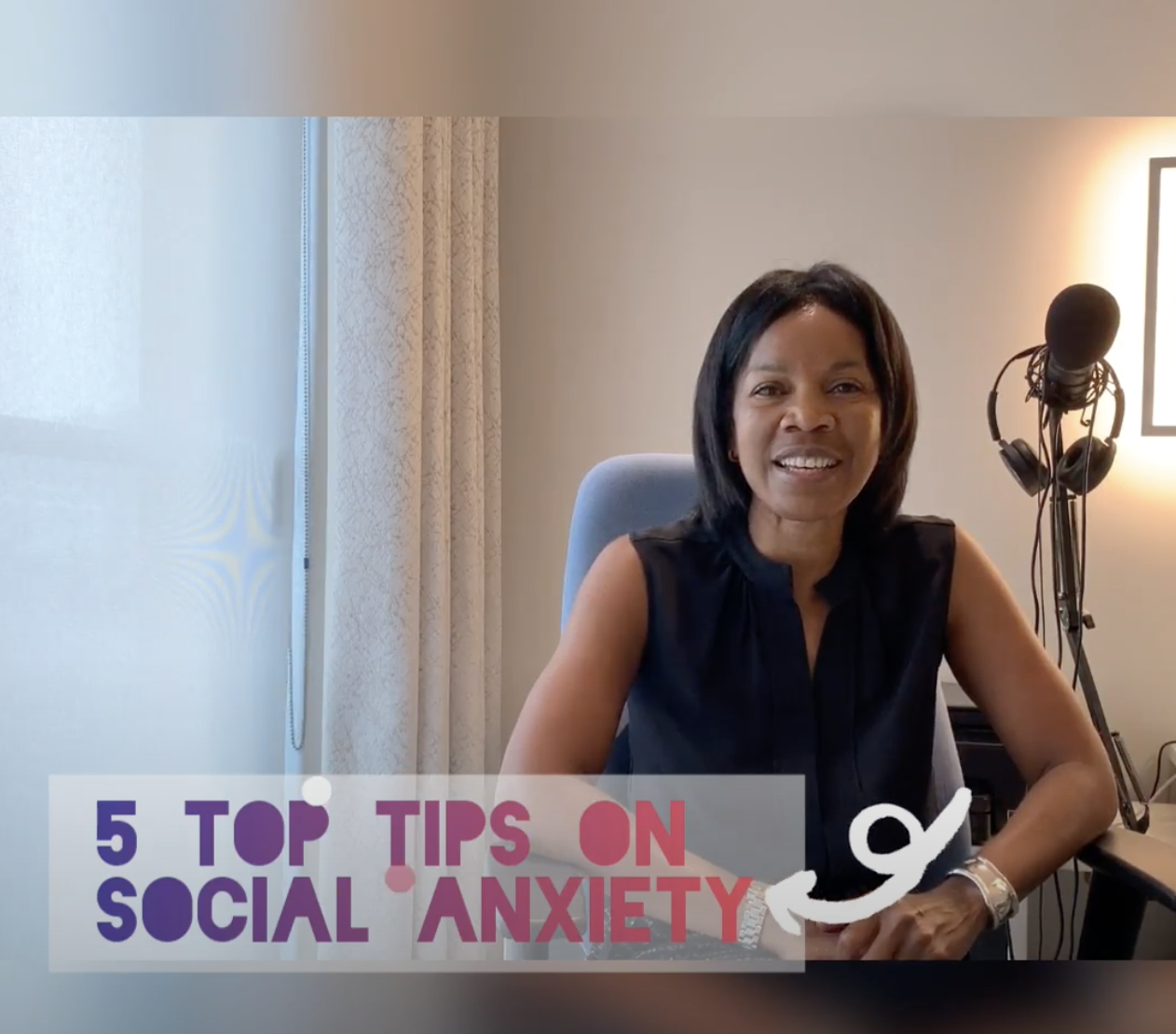
This week we continue sharing hot tips from our most popular podcasts of all times.  Second up is On Social Anxiety with Claire Eastham! Like the first, On Personal Development with Robyn Spens, this podcast is packed with hot tips but we’ve pulled out the top five, which wasn’t an easy job at all. They’re all great.

Anyhow, first on the list is Recognising the Signs. Experts agree that social anxiety is one of the most unrecognised conditions of all times, often mistaken for being shy.  Number 2, Get Help!  All too often we don’t  get help for our mental health issues but getting help is the first step to healing, as it is with physical help.  Check out the entire vlog here.

And keep watching this space for our back to school mini series coming in September, loaded with tips on how to navigate our new world order.  Remember take care of you inside out and See you soon!


Social Media Etiquette During Loss

Nowadays almost everyone on the planet has had a brush with loss. Though the biggest loss of all is human life and we have been overwhelmed with grief on that one. Still the loss of a job, the freedom to go to school, to socialise face to face with friends, and certainly the loss of necessities such as food and medicine are not to be sneezed at. Loss hurts and has emotional and mental consequences.  Of course some loss is deeper than other loss but whatever level it is on, loss can and does cause emotional and mental duress, and needs to be handled with care.

My latest vlog  (well sort of it; still getting there) is about social media etiquette during loss.  As we are spending more time than ever on social media and simultaneously facing great loss, it is so important to navigate the space with good emotional and mental health in mind.   You can watch here!

Meanwhile watch this space for our new podcast released tomorrow, Wednesday, May 20! The topic is rejection, a timely matter, almost always but particularly now during lockdown. Naomi Richards, known as Britain’s Kids Coach gives great tips on how to manage rejection in a tight space. Pass on to your friends as we could all do with a little extra help about now on how to feel accepted during a difficult time.  Take care of yourself inside out and remember it is you I owe.

Staying Connected With Friends During a Crisis

It has been nearly six months since the Coronavirus started making its way around the globe. Wherever we are in the world, we have either been forced to watch from a far as if watching a surreal movie or we’ve been caught up in that movie, disconnected from our friends and relatives unless we live with them.  To this end, we released our Friendships podcast over a month ago with some great tips on how to stay connected.  Had a great opportunity to do a vlog of sorts (still not quite polished yet) on that matter.  Check it out here.

And if you haven’t had a chance to listen to How To Nurture Friendships During a Crisis with Sue Atkins, listen on Apple podcasts or wherever else you listen to podcast.


Keeping Mentally Fit During the Worst of Times

Week two of doing a video blog. As the pressure continues to mount on countries and people around the world, UIO podcast continues, along side many others, to explore ways to keep safe and healthy. This week I look at keeping mentally fit. Of course, this a huge task for any of us, particularly those who have suffered loss and those who are directly suffering ill health. Still it is so important for all of us to join together and do what we can.

On that note, I am sending prayers and heartfelt hugs, even if they are virtual, to everyone everywhere, particularly our healthcare workers throughout the world. So pleased to join our neighbours throughout the country last night in applauding our NHS. Anyhow, watch my vlog on YouTube.

The ESP Of Coping During Unprecedented Anxiety

Anxiety has been a big deal for sometime now in our world but with the uncertainty we are facing due to COVID-19, anxiety has hit new heights and become a pandemic unto itself.

This week, I have drawn on the resources of UIO podcast in a short vlog to suggest three general ways to get our heads around the situation, if you will.  Of course, heeding the advice of our experts (our healthcare agencies) is paramount for safety and well-being.  And as we do this, it is so key to stay well emotionally and spiritually, too.  Watch the clip on YouTube. 

Also, listen to UIO podcast on Apple Podcast, Google Play and Spotify as well as many other channels for more inspirational advice and hot tips on many subjects related to both mental and physical wellbeing.


Finding My Voice

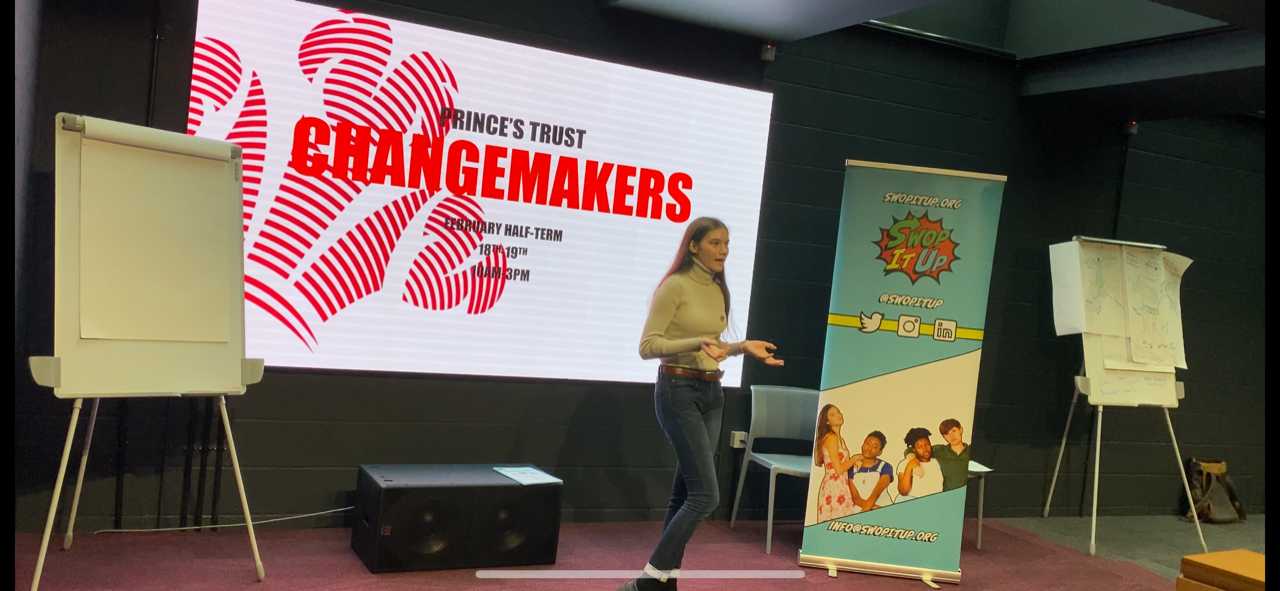
I am delighted to have guest blogger Zaqiya Cajee, the founder of SwopItUp, the clothing swop initiative in schools that is sweeping the country and giving teens a wonderful mechanism to do something about climate change. Check out what she has to say about finding her voice to get the word out about SwopItUp. And learn how to find your own voice for whatever it is that you are passionate about. 

While I had been feeling passionate about bringing positive change to the environment for some time, the first time I had the chance to speak out was in Feb 2019, and I’d just turned 16. I was at the Royal Geographic Society at an event on the impacts of Fast Fashion on the environment. In a lecture theatre room filled with attentive adults, the panellists had been discussing why fast fashion was bad, listing many of the problems (e.g. carbon emissions from production & water use from intensive farming practices), but not focusing on solutions, which really surprised me.

As I sat petrified, my heart practically beating out of my chest, I knew I had to push past the nervousness and let them know that I had a solution. I had to make everyone aware of SwopItUp, my clothing swop initiative in schools, that I believed had the potential to grow nationally or even internationally, keeping huge amounts of clothing in use for longer.  This would be teens tackling one contributor to climate change at scale.

And then I raised my voice, told the room about SwopItUp, and asked the panel for their ideas on how to get more people to engage with it.

Amazing result! It was so worth it, the rush of adrenaline I felt having spoken up,  and afterwards when I had people coming up to me congratulating me and networking with me.  This was a massive reward. SwopItUp was gaining momentum.

Next up was an invitation to speak at a parents eco event at a local secondary school. This was only a small crowd, but I started to learn my presentation style, and understand how to make it feel comfortable for me. I spoke for much longer this time and had some slides to support me, and the questions and feedback that I got at the end boosted my confidence even more.

In August, it was time to step in front of the camera. I wanted the world to be able to hear my message directly from me, so I set about creating a 30-second video explaining SwopItUp,  and highlighting our goals for the future. I uploaded it onto social media and was delighted with the response.

Importantly, it attracted the attention of the Head of Markettiers, a Broadcast PR agency in London, who offered to help me spread my story. They got me radio interviews on many stations, such as the BBC and Love Sport Radio among others.

Coming face to face with skilled journalists and in one instance, one that was a climate denialist, gave me opportunities to really make my case.  I can’t say it was all smooth sailing but I was prepared to fight back, of course, in the most diplomatic way possible.

From this, I’ve gone from strength to strength including being on panels (like Sustainable Fashion Festival), contributing Blog features (including this one) and addressing groups at Universities.

Upon reflection, I have come to understand that finding your own voice can be broken down into four simple steps:

Step 1: 

Determine what your passion is.  It needs to be something close to your heart. What is it you want to speak about?  Do some research on the topic to find similar people and events in your niche.

Step 2: 

Gain support.  This includes from friends and family but also find events in your niche, particularly ones where you can listen to other people present, but use the opportunity of question time to use your voice. This worked for me, though it took a little courage.

Alternatively,  network with other people at the event afterwards. This is a great way to learn a thing or two from the speakers but to also start to gain a little confidence in a low risk environment.

Step 3: 

Do a presentation to a small group on the subject that you are passionate about.

Step 4: 

Consider how to get your message out to a wider audience whether through the use of social media or through the networks and contacts you have already made. Don’t be scared to involve adults to make things happen for you, they are great at opening doors.

I have no regrets about taking those first steps as it has helped me to find my voice and to gain momentum for an organisation that I truly believe in.

So now it’s up to you to start on step 1 and make things happen. I wish you the best of luck.

Follow my journey on Instagram @zaqiyacajee.  Comment on my recent post and include #findingmyvoice so I can follow you on your journey in finding your own voice, Zaqiya x

Dealing With Anxiety On All Levels

So, what is making you anxious nowadays?  If you are anything like me, you might be thinking where shall I start? There is a mountain of worries on a world scale and sometimes equally as many on a local scale. Few will challenge that notion, but it’s the personal ones, if you ask me, that really get the adrenalin flowing.

And before you know it, you’ve had something beyond an adrenalin rush that makes you think you are having a medical emergency.

Been there and done that. That’s anxiety, this feeling of unease, like a worry or a fear. Unfortunately, it happens to us all from time to time and to some people it happens perpetually.  In other words, bouts of anxiety range from mild to severe and when anxiety is severe, it is usually then considered a specific condition and treated as such in the best-case scenario.

But here is the thing. Anxiety comes under the umbrella of emotional and mental health, whether it is mild or severe.  And just as we can do things to maintain good physical health, we can do the same with mental health.  And when more severe mental health problems arise, we can get  help just as we do with a severe physical illness.

I’ve been fortunate enough to do three podcasts around mental health, one of them specifically on social anxiety, a more severe form of anxiety. Check out our podcast, On Social Anxiety, with Claire Eastham, who suffers from social anxiety, for a better understanding of what it is and what it is not. As Claire says, it is not a fear of people, it is an overwhelming fear of being judged by other people so much so that you isolate yourself.

In any case, I’ve learned a lot from all three podcasts on the matter and have gleaned some tips from the interviews, research and personal experience.  Let’s start with how to maintain good mental health to ward against anxiety.

  • Understand your anxiety. Call a spade a spade. The minute you do this it loses its power. This is one of the best tips I have ever received, and it just so happens it came from Laura Miles, guest on Your Body Image Inside Out.
  • Make time for your worry. That’s right! Give it its props, isolate it and move on.
  • Face the things you want to avoid. Claire Eastham points out that if you don’t anxiety wins.
  • Challenge your negative thoughts. That’s a biggie and goes hand in hand with positive self-talk.  Cheryl Grace talks about the importance of this in Your Confidence Inside Out.
  • Shift your focus. Get practical and physical by doing something you enjoy which relaxes the mind, such as yoga, running, or even journaling.
  • Talk about It. A problem shared is a problem halved. 

What about getting help when anxiety becomes more severe and interferes in your daily life.

  • Realise it is not your fault; it is a condition.
  • Reach out to adults/counsellors, people with more experience in the area.
  • Get a diagnosis, if at all possible. Once you know what it is, it is possible to then treat it, as you would a physical illness.
  • Care for yourself. Lots of options here including eating right, getting enough sleep, and managing the time you spend on social media.
  • Talk to someone you trust. It is important to give the negative feelings airtime so that they don’t stay buried in your mind.

So, whether it is mild or severe, anxiety can be managed for a happier and healthier life experience.  Again, check out UIO podcast for more tips.


Keeping It Safe On The Internet

For this week’s blog, I have adapted our October 24, 2019 entry, as it is still as relevant now as it was then and with so much emphasis on staying safe on the internet this week, it makes sense to reflect.

Here we go….  Lots to be said about internet safety. Our  podcast featuring Charlotte Aynsley, e-safety pioneer and expert,  sheds a whole lot of light on the topic as do many other platforms.  Last year, I attended an inaugural lecture of a law professor at King’s College, London, who talked about the importance of Internet Regulation the world over.

But here is the thing, is the message really sinking in, particularly with our teenagers?

After all the Internet is the global hangout, full of wonderful opportunities. What could go wrong? Back in the summer of last year, I actually heard a young boy say something to that nature—why would it be on the Internet if it is bad—and according to On Internet Safety guest Aynsley, this child is not the only one who thinks that way. There are many children growing up believing that everything on the Internet is true and right.

Though this might sound naïve, it makes a whole lot of sense to the young person whose internet experience is all positive until it isn’t. In the UK, the legal age for having a social media account is 13, though about 24% of children have accounts when they are 10 and twice as many when they turn 12.

A few years ago, a hysterical acquaintance shared that her underage daughter was asked to undress over the Internet.  But thankfully it was all curtailed before any damage was done. But what if it hadn’t been stopped.

Sadly, everyone’s story doesn’t have the same ending as my acquaintance’s daughter had, and mainly because few teenagers are aware of the emotional and mental impact that sharing sexually explicit images can have on them, their friends or others or that sexting, as it is called, is criminal if you are under the age of 18. 

Admittedly, this issue is not being policed as strictly as it could be, Aynsley points out, but all the same, consequences can lead to emotional and mental unrest and cause dire consequences for the future.

Another top issue that holds problems for teenagers online is body image, which impacts  girls disproportionately. The pressure on them to be perfect and happy all the time, as told to us by our two teen girls in On Being A Teen Girl Now, is magnified on social media.  Through polished selfies, this aim for perfection goes well beyond looks and enters how our teen girls are feeling about themselves.

Hence the rise in mental health issues amongst this age group. The key is education, Aynsley says and points out that transparency and honest and real life role models and experiences are of paramount importance.

And this honesty doesn’t just rest with the teenagers themselves, it has to live with parents and guardians, social media companies, the government, the police, everyone.

Staying safe on the internet, which can be a wonderful place, requires a joint effort to not only be aware of the problems stacked against us, particularly children and teenagers, but also be willing to tackle the issues.

The good news is that our podcast clears up the confusion around these tough topics and offers teenagers and their guardians practical tools and tips on the matters.  Listen to On Internet Safety on Apple podcasts and other platforms where podcasts are played.

Talking About Mental Health: The Brave Thing To Do

Though I initially wondered if the campaign team for Children’s Mental Health Week meant ‘Find your courage’  instead of ‘Find your brave’ for this year’s theme (my brain was stuck on nouns instead of thinking outside of the box), I am truly struck by the depth of the words.

The phrase really does create an opportunity to not only step up to the plate in a big situation,  but to do so in what might seem the smallest of matters, too, like, for example, acknowledging that something isn’t right mentally and emotionally and then talking to a trusted person about it.

For instance, as a teenager when I might have somehow been left out of a circle,  whether it was intentional or not, I felt quite upset about it but kept it all inside and in hindsight, I can now see how keeping quiet might have impacted my self-worth, my emotional health, putting a blight on my teen experiences. 

Still, to express my feelings about what seemed a small matter was a tall order. Quite frankly, it’s a tall order even for an adult sometimes, let alone for a child. Situations can be misunderstood and misconstrued, making matters worse. No wonder so many people keep quiet. No one wants to be chastised or isolated.

For me, this low keyed approached lasted well until a few years ago. Only after I was diagnosed with generalised anxiety disorder (GAD), that I opened up about my own mental health. Sure, I was quick to see the problems of others, but I found it extremely difficult to see my own issues and talk about them, no matter how small or large.

For instance, while caring for my mother, who had a long-term illness, I often felt beyond depressed and so emotionally tired that I could feel it deep within my bones. I just made it a norm and kept it all in. Reflecting, I wonder if unmanaged grief, along with other stresses, led to GAD.

But with the diagnosis I began to see mental health for what it really is—equally as important and urgent as physical health.  In our latest podcast Series 3: Episode 6 – On Social Anxiety, Claire Eastham talks about the importance of understanding this and getting a diagnosis but as her own story shows,  getting help is not always straight forward.  It is often not only the individual suffering, who might be in denial, but also those around might dismiss the problem or misunderstand it, too.

For example, people with social anxiety are often confused as shy or eccentric, so no wonder they find it difficult to acknowledge or talk about the issue. Furthermore, being pigeonholed or ostracised can have a major impact on self-esteem, robbing the sufferer of the confidence to talk about the condition.

That was certainly my experience as a teenager and when caring for my mother. In the podcast, Claire has some brilliant tips on dealing with social anxiety specifically and one of them is to remember that it isn’t your fault. This tip lends itself to all mental health issues. Understanding this might lead to the willingness to rethink the issue and reach out for help.

Finding the nerves to say something that needs to be said is very much about finding your brave.  What a powerful theme for all of us–adults, teenagers and children alike.

For more resources on mental health, check out our other related podcasts as well: Series 1: Episode 6 – Your Mind Inside Out and Series 2: Episode 2 – On Undiagnosed Mental Illness. Listen to UIO wherever you listen to podcasts or subscribe to our rss feed.

Drawing on Unknown Character Strengths

Here we are the last day of January 2020 and the year feels weighty and heavy in so many ways already, with huge challenges the world over from Australia to China and change in the UK and tragedy in the US and many other places.

When the chips are down, it is so easy to look down and stumble but thankfully we are spirited people, if you will.  At the worst of times, we often find the will to pull through, drawing on character strengths we didn’t even know we had.

Nearly three weeks ago, I found myself in such a time as this.  Let me tell you about it:

On a rainy Saturday, I flew to the US (Albany, GA) to surprise my father for his 85th birthday and a surprise party and set out to have a relatively normal time—cooking for him and so on. 

But calm turned into a sort of storm on Monday morning shortly after I exited the house to pick him up for a treatment he gets regularly.  Seconds after I tried to release the garage door from the keypad on the wall to no avail, my US phone ring and a happy baby sister was on the other end of the line, just checking in to chat as she drove to an offsite meeting (she is a teacher).  A great feeling washed over me to hear from her and also, I knew she would know what to do. Quickly she ascertained that the door not opening was a local problem because the twin door opened as normal. Still I had to spring the car and she had just the solution: to use the emergency cord and presto, the door went up and I reversed the car out.

Still on the phone with Chanta, I hopped out of the car, the engine running, and used my might and power, my right hand to pull down the ailing door. Unbeknownst to me, my hand was in the crease of one of the door panels as it folded to close and with all the power of a garage door it closed on three of my fingers and I yanked and saved two of them (though they got scrapped) but my middle finger did not escape. Trapped. 

My scream was loud and sudden and Chanta’s concern matched it, getting me off the line in an instant and calling 911 (same as 999).  In the next few minutes, I launched at least five prayers, asking for strength to lift the door with my left hand, followed by the act of trying to no avail. Alas, I prayed for the resolve to endure the situation.  And following this prayer, I too called 911.

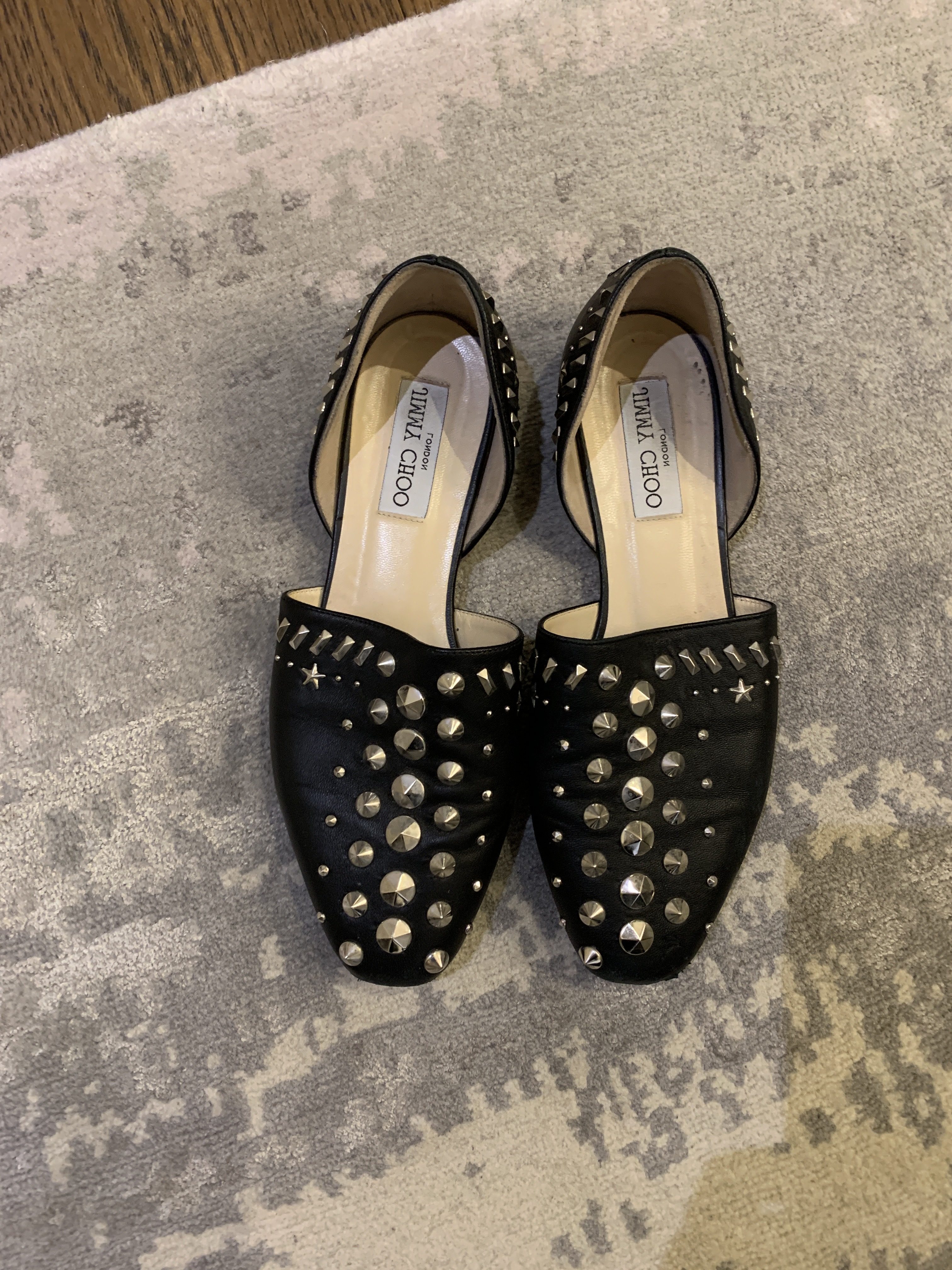
For 20 minutes or perhaps more, I talked to the EMS operator, explaining there was no blood and yes there was some pain and a bit of a giddy feeling and then I had a practical moment where I talked out how to save myself and my finger in the event that I fainted. All I could think was that my head would  hit the asphalt and part of my finger would be left in the door. So, I dropped on my knees in my London best (Ultra Suede trousers and Jimmy Choo flats) and leaned my body against the door.  I sort of remember explaining this, but as I was likely delirious, who knows.
I do remember being asked if I was having trouble breathing, as I was intentionally taking deep breaths to avoid a panic attack. In my state of shock, all I could think was stay calm, there is nothing you can do but stay here until help comes, so with all the adrenalin my body could muster up, that’s what I did as the EMS operator assured me that firemen and paramedics were on the way. 

As they closed in, I heard the sirens and imagined them trying to drive the fire truck around the house. I told the operator to tell them that they had to leave the truck, the driveway was too narrow and suddenly three beautiful men (looked like angels) burst on the scene bearing at least one crow bar but in the end, it was the brain that came through when one of them used the garage opener in my dad’s car to release the twin door and then release the one I was trapped in and as it went up panel after panel, I had a weak moment.

“It is not going to let my finger go,” I cried out meekly and just as I said “It is not opening” it did and out my finger came, the tip really white and as flat as a spoon.

No, we did not photograph it and no I am not making it up, though I have written fiction.  Dizzily I ambled over to the car, ushered by one of the firemen, who looked as relieved as I did. I remember accounts of saved fingers and fears of surgery and then more sirens and the paramedics and my sisters rushing to the scene.  More angels!

Then came the flood of tears and an awkward hug bestowed upon one of my sisters; maybe I was checking that I was really alive. But still I was relatively calm, now feeling more embarrassed than anything. I rambled about how stupid I felt even though the paramedics and the firemen reminded me it was an accident and that actually I was far from stupid, having come out with my finger.

It was not until I was in the ambulance, on the stretcher, with an IV in my arm, feeling faint, that I grasped the danger of the situation. As my blood pressure bottomed out twice, the ambulance tore down the street, screaming towards the hospital. Then all the frightened (internal) troops begin to march in, heckling me. Thankfully, the brave, patient ones had held them off when it was most necessary and again proceeded to push them away.

To cut to the chase, after a bit of bureaucracy I was in and out of emergency in three hours or less with a very bruised and contused finger—no broken bones, no deformities, no long-term implications—just a slow and painful healing process that has slowed me down immensely (my finger feels like a hard shell at best and nerve pains fire off when least expected).  The good news is that I learned about lots of character strengths that I didn’t even know I had.

While I would not repeat the situation for all the Jimmy Choo’s in London and that is a lot of shoes, I am feeling blessed to have incurred limited physical damage and to have come through ahead of the game emotionally and mentally, too.  Yas!

So, though the year has started out heavy, it’s good to know that what’s inside is often enough to pull through but it also contains the stuff you are really made of. Unbelievable.

Oh, and yes, a special thanks to the 911 operator for comforting me, the three firemen who sprung me and the wonderful two paramedics who took care of me and rushed me to the hospital.  Amazing! Not one time did they consider it a small matter. The world is better for their likes. Blessed!