Category: On Life

Getting The Best Out Of Life

Our latest podcast, On Girls’ Rights, is hot off the press, if you will and full of information on how to get the best out of life.  You have a right to, you know!

Actually, when I was a teenager, I am not sure I did know my rights, such as the right to reject sexualisation, for example.  From boys to men, I have had more than my fair share of unwarranted and unwanted comments about my clothes, my body, etc… And though I might have felt uncomfortable, I have often chosen to ignore the unnecessary nonsense and let the offender off the hook.

Make no mistake about it, I’m not talking about compliments. Those I love! I am talking about cat calls done with a smile. Nowadays, I’m likely to call a spade a spade but as a teen girl, I kept quiet more times than not.

Of course, every situation doesn’t call for action but when it comes to protecting your rights, sometimes you do have to step outside of your comfort zone—you have to set boundaries and honour them.

As our guest, Lindsey Turnbull, founder of Miss Heard Media, points out: boundaries are very important, not only for protecting your own space but they’re about respecting other people’s space, too. Sometimes the lack of boundaries puts people off. I can relate to that. Once I had a friendly neighbour who loved paying compliments and then one day, he referred to a certain dress I was wearing as delicious. Immediately, I stepped back and put up a physical boundary, refusing to make further small talk in any way, shape or form.

No, I didn’t call him out so to speak, rightly or wrongly, but I broke off our informal relationship, if you will. He got the message. His comment not only put me off, it did not serve me at all. Thankfully, at that stage in my life, I was confident enough to understand that he had no right to make such a comment about my clothing. No hemming and hawing or guilt to be felt about extracting myself from an uncomfortable situation. I was out of there.

But when I was younger, I often had similar things said to me or one of my peers as if it was the most normal, healthy thing to say.

The key, says Lindsey, is to really like yourself. The more you like yourself, the easier it is to say no to things that don’t serve you, whether it is a seemingly small thing like accepting a salacious comment or a big thing, like going further in a sexual relationship than comfortable with.

You do have a right to grow-up without so many uncalled for pressures. Check out the podcast for teen girls’ On Girls’ Rights for more advice and hot tips on how to exercise your rights. As usual, the podcast is full of info on how to get the best out of your situation. Listen on our website, iTunes, Stitcher, Soundcloud or wherever you listen to podcasts.

Nothing Trendy At All About Gaslighting

An age old communications technique is do what you say and say what you do.  Sometimes this is easier said than done, particularly in business, but when it comes to personal relationships, I haven’t really had any problems sticking by the mantra, except a time or two when I meant to return a call because I said I would and failed to do so because something else came up.

I am sure I’m not the only one but consistently saying one thing and doing another particularly when it causes mental and emotional upset to another might be considered a form of mental and emotional abuse, known as gaslighting.

If nothing else, it is bad character for sure.  Anyhow, one article I read on gaslighting referred to it as the latest dating trend. If that is true, then at the risk of being cynical, I am going to suggest that you watch out for the trend.  In no way, shape or form, should emotional abuse be trendy—quite the opposite.

Thinking back to my own teenage years, I do remember being promised a phone call or something or other more than a time or two that never materialised and the person picking up the next day or so, as if this was not a problem.  And interestingly enough, though hurt about it, I don’t remember breaking any deals over this type of consistent bad behaviour, not in high school anyhow. Other girls had the same problem and just seemed to accept it as a norm, too.

Surely later in life, my peers and I got the email, if you will. Call it gaslighting or not, it is not healthy to be caught up in a relationship that puts you down, whether it is a romantic relationship or a friendship. I can’t recall ever thinking the pattern was emotional abuse and the term gaslighting was unheard of, at least by me and my peers.

In our latest podcast, On Emotional Bullying, radio personality, Jillian ‘JJ’ Simmons stresses the importance of seeing emotional abuse for what it is, recognising when someone is intentionally manipulating you to gain control.

In gaslighting, the abuser, if you will, consistently and intentionally causes confusion to the degree that you can begin to doubt yourself. Did he or she say this or did I imagine it? Did I make it up, etc…? Been there done that, I will confess, but certainly didn’t recognise it as gaslighting.

You made it up, the gaslighter will likely tell you and if you hadn’t made it up, you’d be able to prove that I said it. With no proof, you begin to feel a bit low. Confusing, hey. As with all emotional abuse, it’s best to recognise it for what it is, as JJ points out. And as soon as you can, get some help. But if help seems too far away, JJ reminds our listeners about the importance of journaling, writing it down, and staying in a safe place mentally and emotionally, out of the space of the abuser, if at all possible.

In our upcoming podcast, rounding off our short series, UIO guest Lindsey Turnbull talks about the importance of exercising freedoms and rights in youth and that means setting physical and emotional boundaries, even if they are online.  Her point is just as you wouldn’t allow an abuser into your bedroom, don’t allow them into your online space, giving them access to your mind. 

Food for thought as we look forward to On Girls’ Rights with Lindsey Turnbull, out June 12.  Stay tuned and in the meantime, do as you say and say as you do and ensure that those in your company do the same. And when they don’t, well remind them that there’s nothing trendy at all about bad behaviour. Quite the opposite.

Control What You Can for Better Character

You can only control what you can control.  How many times have you heard this phrase, particularly in the heat of anxiety? Though I have heard it a few times myself, most recently it was in a context that made it far more profound than usual.

While recording UIO podcast’s next release On Emotional Bullying, guest Jillian ‘JJ’ Simmons, made it clear that when it comes to being emotionally abused, particularly in a familiar situation, that you have to dig deep and control what you can.

This got me thinking about character building once again.  Still elated over our most recent podcast  On Character Building with Paralympian Elizabeth Wright, I couldn’t help but wonder what character strengths I recently called upon to control what I could in a bit of a residential quandary.

A day or so ago, I woke up to a beautiful day on my leafy London street, which still counts a bit as being rather central, depending on who you ask, and rushed to pull the curtains back to catch some sunshine. But that is not all I caught. There was an abandoned motorcycle, thrown on its side right out in front of my house. Having been stripped of everything, including its wheels, its license plate and so on, it looked rather unsightly.

Let’s just say as the sun moved expediently behind the clouds, I backed away from the window with an ill feeling welling up in my chest. I didn’t know what to think—had someone done this to a neighbour’s bike or had someone done this elsewhere and brought it to the said spot in front of my house?  Later, I would find that the latter had transpired in darkness the night before. One of our neighbours had heard a fuss around 10ish and looked out to see what was going on and saw a white van in the area. She thought he was parking and had somehow made the noise. She moved on as he sped away.

Anyhow, I told myself that surely the entire neighbourhood was in an uproar over this thing because however it came to pass it was a crime and the evidence was in front of my house. So, I got on with work and thought to myself by the time I leave for my noon appointment, it will be dealt with.  Yep, you guessed it, it was still there when I left to go out and nearly three hours later when I returned, it still had not moved.

Suddenly, my gut prodded me to do something, make a call, anything, and as much as I wanted to ignore it, I knew that it was this same strength of character that had emerged time and again to resolve a dilemma such as this, like the time it brought me peace and quiet in my former neighbourhood, and the endless times it has made the difference in my father’s healthcare, my mother’s and mother-in-law’s, too.

Begrudgingly, I consulted Google, learning how to file a police report online for non-emergency crimes. Done, so I thought, but had a niggling feeling I needed to called my local authority.  Done, for sure now, I thought, until evening arrived when the bike had not moved, so I called the local council again to find that they had indeed attended to find the vehicle leaking petrol.  Yes, petrol. Was I the only one who thought this was not a good sign.

As my fortitude, resilience, whatever you want to call it, rushed in like adrenalin, I couldn’t hang up fast enough to call the non-emergency police number.  After much explanation and determination to hold any anger or caustic words back, I convinced the police to send a few fire fighters, who confirmed that there had been a leak of perhaps oil, so they addressed the matter, standing the vehicle and sanding the hazardous substance, and then said that the council would have to remove the abandoned vehicle.

So, I took a deep breath and asked myself, what can you control?  Though low on patience, I made another phone call to the council.  And as much as I would love to say Eureka, it is all done, I am still dealing with what I can control—outwardly the phone calls and inwardly, I am keeping the adrenalin at bay.

Stay tuned for On Emotional Bullying, out Wednesday. In the meantime, visit our website to hear more from UIO, the podcast for teen girls. We’ve got you covered.

Out With Caution And In With Compassion and Care

In a catch-up, warm-hearted conversation with two longstanding friends yesterday, my cup ran over with excitement as I told them about the launch of our Wait Awhile video, released yesterday.  The video has already, at least for me, infused new life into the initiative, which was only born in February.  So eager to nurture that life, I was poised for an insightful conversation.

And when the questions rolled in: what is it really about, why are you doing this, etc… I rose to the occasion with ease, focusing on the concerns about the narrowing gap between being a girl and being a woman and what UIO podcast is doing to support girls in reclaiming their teenage space.

And then I made an invalid point that has niggled me throughout the night, and has somehow found its way into this blog, offering an opportunity to not only set the record straight, but also to put my own mind at rest on the matter.

Anyhow, the comment went something like this: you have to be cautious about these things, how you make your points nowadays.  One of my friends hopped right on it and told me rightfully so that my caution didn’t make sense when it comes to our Wait Awhile initiative.  Why can’t you just make it clear that whatever it is you are talking about, whether that’s sex or cosmetic procedures, that it is premature. Mine, of course, is a paraphrase but makes the point.

How refreshing, I thought, and though not defensively but rather quickly pointed out that if I was doing an interview or writing a blog, I would and do cut right to the chase. But when dealing with a marketing tool, one has to open the door so to speak. 

In my mind’s eye. I wondered why I had said that when UIO podcast is built on straight talk, coming straight from the straight talk queen of the year. Me. Me.  Just ask my youngest niece, she’ll confirm.

Though it can be painful sometimes, I do work hard to tell it like it is, particularly if it is a serious matter where the health of teenage girls is at risk. And I have quickly learned that there is a difference between sugar coating and handling with care. I tend to think that UIO podcast, inclusive of Wait Awhile, handles these challenging issues with care.

Our new video is a perfect example of laying out the concerns and facts and looking at why Wait Awhile exists in the first place.  It is not as much about caution as it is care. 

In the meantime, my other friend followed up with the question of how do you engage young people on such tough subjects without turning them off?  For example, if having cosmetic procedures has become a norm, why would girls decide to wait awhile.

That’s when our podcast for teen girl’s slew of wonderful guests popped into my head. Often with honesty and openness and based on their own experiences and expertise, our guests are able to shed great light on dark topics and of course, there is our recent research study that states the facts, as well as many other research studies that are concerned with both the physical and mental health of teenagers, girls and boys alike.

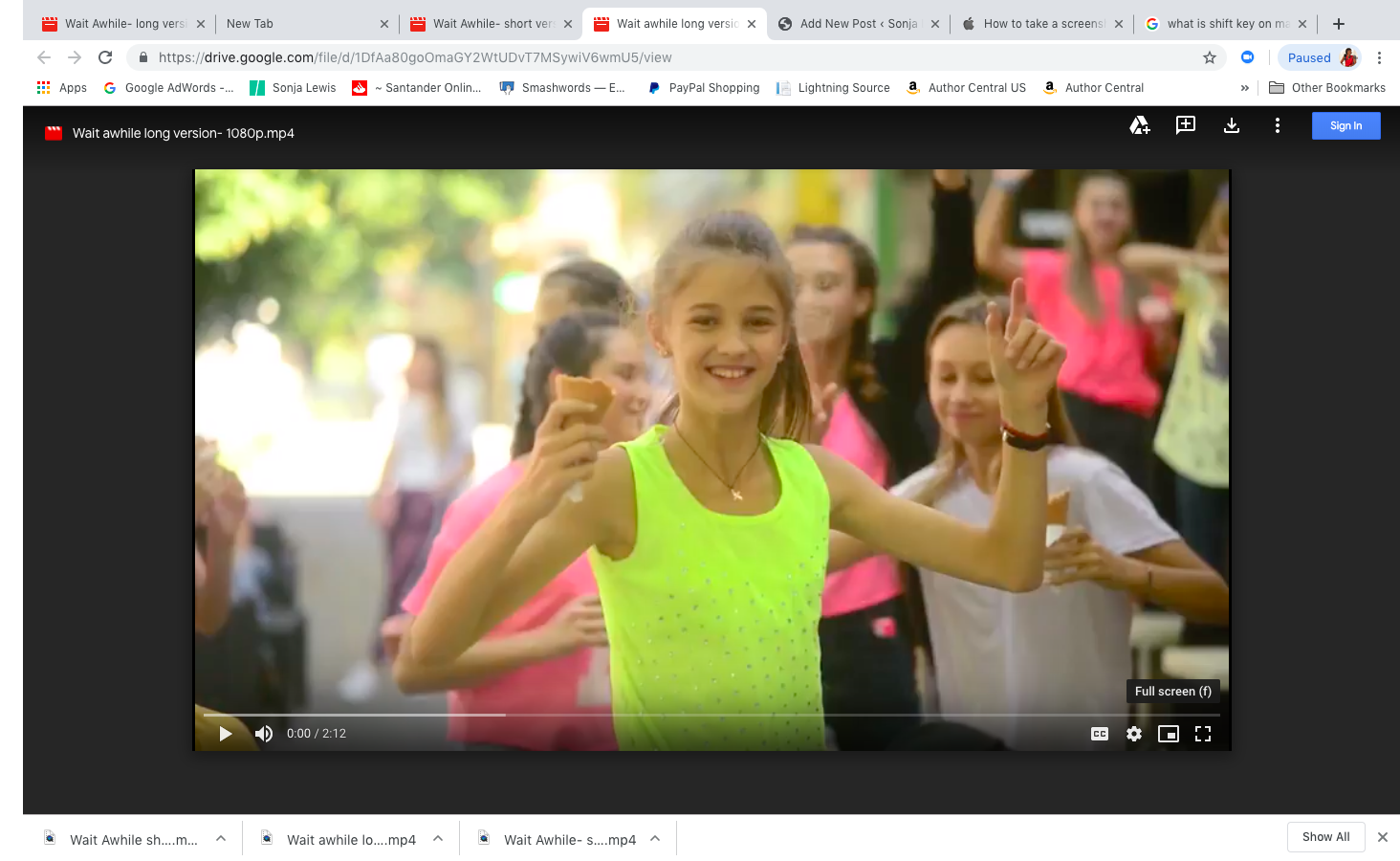
Reflecting on my time with my two dear friends, I was reminded that our video, like our podcast, is a communications vehicle that raises concerns and cautions for us all in our ever changing world, and offers platforms for insight and debate on the topics, but the key has been and always will be addressing the points as openly and honestly as possible and remembering it is not so much about being cautious about what we say but saying the truth with deep compassion and care. See the video on our website  or via  YouTube here


Never Leave Home Without Good Character Traits

Good character traits are paramount when it comes to overcoming pressure or challenges. It’s the difference sometimes in whether to give in or stick to our own values or whether to give up or keep it moving.

With the unprecedented pressures on teenage girls nowadays, I am delighted to hear of the return of emphasis on character building. The first podcast in our new series, with Paralympian Elizabeth Wright, who advocates character building throughout schools in the UK, deals with the topic. It is out May 15.

Meanwhile, talking about character building brings a breath of fresh air to the debate on how to address some of the modern-day pressures we all face. Sadly, for some time now personality traits have served as the moderator for what is acceptable and what is not.  And when someone is either out of character or displays bad character traits, we often hear: that’s just the way she is.

Call me old fashioned but I call it bad company, bad character. Surely, it is unreasonable to pass off unkindness, rudeness, disloyalty and the lot as just the way someone is.

When I was growing up, I think the emphasis on character building was still on trend, if you will. It might have been losing its steam, but I knew the importance of good character traits in not only building good solid relationships, but also in achieving success in any undertaking.  Another story on whether I always displayed good character or not, but I did understand it.

If I wanted my parents to trust me, then I had to be honest and if I wanted my friends to trust me, then I had to be loyal. And the one time in my teenage life (surely there have been others) when I wasn’t loyal, I suffered painful emotional consequences seemingly for ages. I won’t go into the situation and hope others involved have long since forgotten, but this betrayal of sorts called my integrity into question. All I will say is that there was a popular boy involved. Never mind.

Anyhow, not only did I take a harsh fall from the throne of grace in the eyes of a friend or two and possibly a relative, I crashed landed in my own mind’s eye. It took years to rebuild my own self-esteem and to forgive myself for the deed, even if it was small. But the point is this: without integrity, I might have never known that I was out of character. 

Good character traits can and often do serve as a radar in relationships. Also, good character traits can see us through an achievement and aid us in the worst of times.

When it comes to achieving, I’ve always been slightly above average and slightly below excellent, but where I sit in the great in between is powered by my character traits of perseverance, optimism, reliability, conscientiousness and self-discipline to name a few. Though I wouldn’t take nothing for my journey, there are bits about it that I didn’t really appreciate–having to go to choir rehearsal every Friday night (okay one or two out of the month), lead a song when I could not sing, and attend Sunday School every Sunday morning and participate in the discussions.

But these activities, like them or lump them, fed into my character and drove me to pick up the phone as a young media specialist in New York City and pitch a story, even if I did dread it; sing from a stage in Poland to an audience, who insisted I had the voice of Whitney Houston until they heard it in song; do the right thing in enormous sticky situations, although I didn’t always feel like it; and most recently dig deep and speak up on a overcrowded broadcast platform, when I felt a bit mismatched.

Through these experiences and others, I have come to learn over the years never to leave home without my good character traits. As for the bad ones, I’ve resorted to waiting awhile to keep them in check and I must say the benefits have been enormous.

New Podcast Series Coming In May

As we prepare for our third podcast series to launch in May, I find myself preparing show notes on some rather tough subjects, one of them emotional bullying, a topic that is as elusive as it is complex.

Unfortunately, emotional bullying is likely the most common form of bullying because it wears so many different hats. Think of verbal abuse, social exclusion, spreading gossip and rumours, telling lies, name calling, backstabbing, betrayal, etc.

Health Direct, a website of the Australian Government sums it up as one person maintaining power or control over another person. And though there are varying definitions that link bullying and abuse to relationships, the point is: bullying is destructive and damaging whether in an intimate close up relationship or a distant one.

A key theme about emotional bullying is that it is repetitive. And according to the Positive Parenting Center’s website, the older girls get the more prevalent it becomes in their lives.

Make no mistake about it, however, emotional bullying is not just a girl thing.  It is something that can and does happen to any and everyone, regardless of background or age.  It just so happens that some statistics in the US show that physical bullying drops off somewhat for girls as they get older and emotional bullying increases.

Sadly, bullying makes its way into adulthood all too often.  I have far more memories of possibly being bullied in the workplace than I do at school. One of my first bosses was definitely an emotional bully, who attacked my work repeatedly and threatened to fire me, after I pointed out a clear matter of discrimination.  A close friend had a similar experience, though the attack on her came out of nowhere, causing her to change the course of her career.

Both experiences had mental and emotional consequences but thankfully we both saw the problem for what it was and managed to put a stop to it, which isn’t always the case.

Thinking back to my school days, however, unless bullying got physical, it wasn’t always called what it was.  That is the thing about emotional bullying; it is ambiguous and hard to stamp out for that very reason.  It is without the physical bruises, but the scars are there, if only the target feels them.

I have hazy memories of a particular student emotionally bullying certain kids on the school bus. I did my best to avoid the person but because this person didn’t have the mythical hallmarks of a bully, there was no proof in the pudding that the taunting was taking place, even if the person only poked and prodded with words– threats and lies.  And when all else failed, it was easy to spread rumours and gossip and forbid followers to hang out with the target.

In those days, help didn’t seem to be a stone’s throw away, though it likely was. Bullying wore a mask and in some ways still does. However, nowadays, the mask is being ripped away. The key is to recognise bullying for what it is and get help as soon as possible whether that means talking to a family member, close friend, teacher, someone you can trust.

And do check out past podcasts, all on our website, particularly On Dating Inside Out.  Again, watch this space:  our new series of UIO, the podcast for teen girls,  is coming in May with a great line up of guests, including a Paralympic three-time medallist, a popular radio personality, and a media entrepreneur creating opportunities for teen girls.

Planning for future you

Our latest podcast, On Personal Development, the last in our second series of UIO, the podcast for teen girls , got me reflecting upon my own personal journey thus far—the importance of gaining self-confidence and self-awareness early on in life, as well as finding role models.

And though I can’t pinpoint a place in time when suddenly I knew the importance of developing personally, I do remember how much I wanted to be a journalist as a teenager and what I did to get the show on the road, at least from a personal perspective. From reading the announcements at church as if reading the news on NBC to behaving like an investigative reporter when I truly had nothing to investigate, I took a rather naïve yet enthusiastic approach to pursuing my goals.

My family might recall that I always had a question for you no matter what the situation. How could they forget?

In my mind’s eye, all I had to do was hone my natural skills and for sure I would get whatever job I pursued. Peter Jennings, who dropped out of high school but still served as anchor of ABC World News Tonight from 1983 until his death in 2005, was doing so after all.

You see, though I was born in a different era, a different gender, a different race to Jennings, it never occurred to me that I might not have the same breaks, same opportunities that he had. And as it turned out I didn’t, but I did have the desire to pursue my dreams and the confidence to act. And while I didn’t end up on ABC, I have enjoyed some wonderful success as a journalist, a writer and now a podcaster but not without a challenge or two.

To this end, On Personal Development special guest Robyn Spens, a coach and rapid transformational therapist, points out that confidence is key, particularly when in an unfamiliar situation or facing challenges. Here, here to that.

I will never forget feeling as though I was going to drown during a re-branding project, which I was leading, as a major organisation’s interim communications director. And suddenly in a particularly confident moment, it hit me that I knew more than anyone else, even if I didn’t know everything. Thus, it was confidence that saw me through.

It really matters in developing one’s full potential, but it is not the only thing that matters. Robyn talks about the importance of nutrition and sleep, for example, something I am still getting my head around.

One thing that I have learned along the way is that personal development is for life, even if there are stages in life when some bits are more relevant than others. For example, when I first moved to New York, I knew very little about table etiquette. Sure, I knew the basics and had pretty good manners, but when I found myself at a posh event at Tavern On The Green, acting as publicist to the CEO of my organisation, things got really personal.

Since then, I have resorted to my investigative journalism skills. When in doubt find out. Check out On Personal Development for more hot tips from Robyn Spens.

Putting The Spotlight on Reclaiming Sacred Space

When unhealthy change comes fast and furious, we see it for what it is but when it comes slow and subtle, particularly if it is seductive, we tend to turn a blind eye to it, until it causes an explosion of sorts. 

That is what appears to be happening in the world of teenage girls—the pressures that are staring them in the face daily are causing widespread concerns. 

To no direct fault of their own, girls are a part of a values shift in society and when values shift, so do norms, mores.  Normalising non-medical cosmetic surgery, for example, even if unintentionally, is a little bit more than a trend. It has fundamental implications for mental and emotional health, as does lowering the bar for when teenagers are given a green light so to speak to engage in sexual activity freely, for example, without reference to emotional and mental health.

Our Wait Awhile research as featured in The Telegraph’s ‘Thousands of girls as young as 13 turn to cosmetic surgery as social media pressures mount,’ alongside The Sunday Times’ recently published ‘Teenagers line up for Botoxjabs to mimic celebrities,’ turns the spotlight on the concern for girls signing up for non-medical cosmetic surgery.

Both pieces, as does our research, begs loads of questions.  What does it all mean? Who is to blame? Is this a trend? Over the past few weeks, not only have I been asked these question time and again but also, I have pondered them. And while the answers will hopefully come in insight and debate over the next little while, followed by lasting solutions, rather than in finger pointing and casting blame, we have something to celebrate.

The cat is out of the bag. This is a hidden story that has haunted me for some time now.  As a longstanding advocate for providing safe platforms for girls, I have been long concerned about the shifting norms we all face nowadays, and particularly the impact this shift has on teenage girls.

For too long, society has turned a blind eye to the mounting pressures that teenage girls are facing because of our obsession with instant gratification, glamour and glee.  It is quite easy to chalk it all up to generational trends and believe that girls, themselves, are setting the trends and leading the way.

But let’s face it, teenage girls, like the rest of us, don’t live in a vacuum.  They are not exempt from this chaotic state in which we live.  

Actually, there is nothing wrong with any of the above concepts unto themselves—a little instant gratification from time to time can do wonders for  self-esteem but when we feel entitled, that is another story.  And on beauty, it has to be the most misused and misunderstood word of all times. Okay maybe liberal takes the cake.  But the point is this: beauty is a wonderful thing. When thinking of and speaking of creation, itself, beauty sums it up.  It is when we set and subscribe to aesthetic standards that isolate and marginalise some and that we simply cannot measure up to that we end up compromising something emotional and mental, which leads to the rise in frustration, unhappiness and all the rest.

It is not bad thing that we are now seeing these stories out in the open, which have often been unknowingly validated, feeding into the continuing shift in our values, which dictate our norms.

So what can we do? See the new direction for what it is and advocate on behalf of and support the most vulnerable groups and communities in society. And aid them in setting the record straight and reclaiming their own sacred space.  That is what UIO, the podcast for teen girls, inclusive of our Wait Awhile initiative, is all about. Join us and have your say via Disqus, our comments platform or contact me directly here .


Keys To Good Family Relationships

Having spent a weekend with family, I was reminded of how dependent small children are on their parents and guardians for survival. Sure, they exercise a bit of independence, choosing their own outfits and making clear what they prefer to eat and so on but at this tender age, children are not mature enough to decide on their own bedtimes, for example, or how long they should stay glued to a television or an Ipad. Left with them, they would stay up indefinitely and pay the consequences later.

Very few would debate the importance of having a pragmatic relationship with small children but as we grow, the balance of power becomes unclear.  Maybe it is the word power that throws off teens and parents alike.  I know when I was a teenager, I dreamt a world of freedom and independence. It was only when I started working and paying my own bills that I realised how free I had been, of course, within the family unit.

Upon reflection, the world around me had a lot to do with my idea of freedom. For example, if Mary Jane (there was no Mary Jane in my graduating class) was driving at 15 and got a new car at 16, then I reasoned that I had a right to do the same.  My parents didn’t quite see it that way. And once they let me know their views, the story ended or did it.

It did as far as they were concerned but in my mind’s eye, I couldn’t wait to grow-up, so I could jolly well buy my own shiny new car as and when I pleased and have exclusive power over my own life.

Of course, as a young adult, I learned rather quickly that there is a complex line between desire and attainment, that reaching a certain age doesn’t make you all powerful so to speak or give you freedom.  Actually, it is quite the opposite. It was having healthy boundaries and good family relations that gave me the freedom to grow. 

Without those key elements, I feel certain that I wouldn’t have had the confidence to move to New York and then London.  But what makes good family relationships.  Helen Lewis, guest in our podcast, Your Family Inside Out, offers many hot tips.

One key is effective communications. That means sharing your views calmly and clearly.  And this doesn’t stop with young adulthood.  Even now as an adult, I find this advice sound.  Otherwise, the problem does not get resolved. It gets escalated.

Another key element in good family relationships is respecting boundaries.  All families have them, regardless of the age of the family members. Naturally, however, boundary lines change as we grow older.  As a little girl, I wouldn’t have been allowed to ride my bicycle to the store but as a teenager, I could.  No wonder I jumped to the idea of driving ever so quickly. Never mind!

The point is: each family is different and has a different rhythm that they harmonise to and no matter what our age , it is important to have open, honest and effective communications and to respect the boundaries that are often in place to protect us, afford us the freedom to grow not only physically but emotionally and mentally, as well. For more information, listen to UIO, the podcast for teen girls.

Celebrating Your Girl Super Power

Though women and teenage girls are experiencing unprecedented pressures to be perfect, to be happy all the time, we girls remain amazing and there is no better time to be a woman, a girl and to celebrate.

Celebrating womanhood is appropriate any time of the year but during March, Women’s History Month, honouring and celebrating women is a daily event, not to mention the excitement of International Women’s Day, March 8.

Appropriately so, we have re-released our Identity podcast, a wonderful celebration of identifying as a female.  Sisterhood co-founders Rachita and Rebecca talk about the wonderful girl cell that we ladies have.

“The girl cell is your super power. “

Ever since I heard this emancipating statement, I have been in fifth gear, encouraging teenage girls to reject the modern pressures in their lives, posing as necessary, norms that will serve them now and forever more.

Hence, our wait awhile initiative, starting its third week of life. With alarming statistics revealing that some teenage girls are actually getting non-medical cosmetic surgery, I have had endless conversations and queries about the matter. How can this be happening? Are these procedures legal, etc?

One growing concern I have is that the real point of this statistic–teenage girls are being forced to grow-up too soon– is lost on society. It some ways it appears that the story is yet another sensational piece, detaching it from real girls.  Not so fast!

The reality is that real teenage girls have had their lips done several times to make them bigger, had fillers in their mouth so gums don’t show when they smile, fillers in their nose so they can contour it, had numerous injections in their bottoms, and Botox from the age of 16.

This is real life, not reality television, impacting the lives of a generation of girls who are making these choices under pressure, often blaming the social media culture in which they live. Social media has a lot to answer for, which is why we are supporting The Telegraph’s duty of care campaign and calling on the Government with as many strokes of the pen as we can to make social media a safe space for teenage girls.

But social media alone is not the only problem. Our girls are growing up under the influence of modern pressures on and off media. Our research corroborates that some of the pressure are systematic, if you will.

So change is needed inside, out if you will.  Meanwhile, we are saying to teenage girls: embrace your girl cell, your super power, use it to strengthen your identity. Follow your passions and side step things that will likely lead to regret and enjoy the good stuff about being a girl and as for the good stuff about being a woman, await awhile. It will come.

For more tips on identity, check out Your Identity Inside Out and tap into your girl cell, your very own superpower.