Author: Sonja

Getting there sanely during the Tube Strike

Millions of commuters are seeking different options today to get to work, as RMT and TSSA union members strike over proposed job cuts and ticket office closures. According to Transport for London, the strike reduces London’s underground service by 70 per cent

And though I’m working from my home office with no appointments that require a commute, I have been there and done that and know what it feels like to wait around for minutes that can sometimes lead to laborious hours. It’s horrible, particularly when it’s raining, but that’s another story—the weather that is.

In the meantime, rather thoughtfully, many media outlets are offering advice on how to survive the strike. One such piece in The Guardian online suggests walking as the number one option and taking the bus as number two.

Both are good ideas as far as I am concerned, but the second is perhaps a more viable option for those who live further afield.

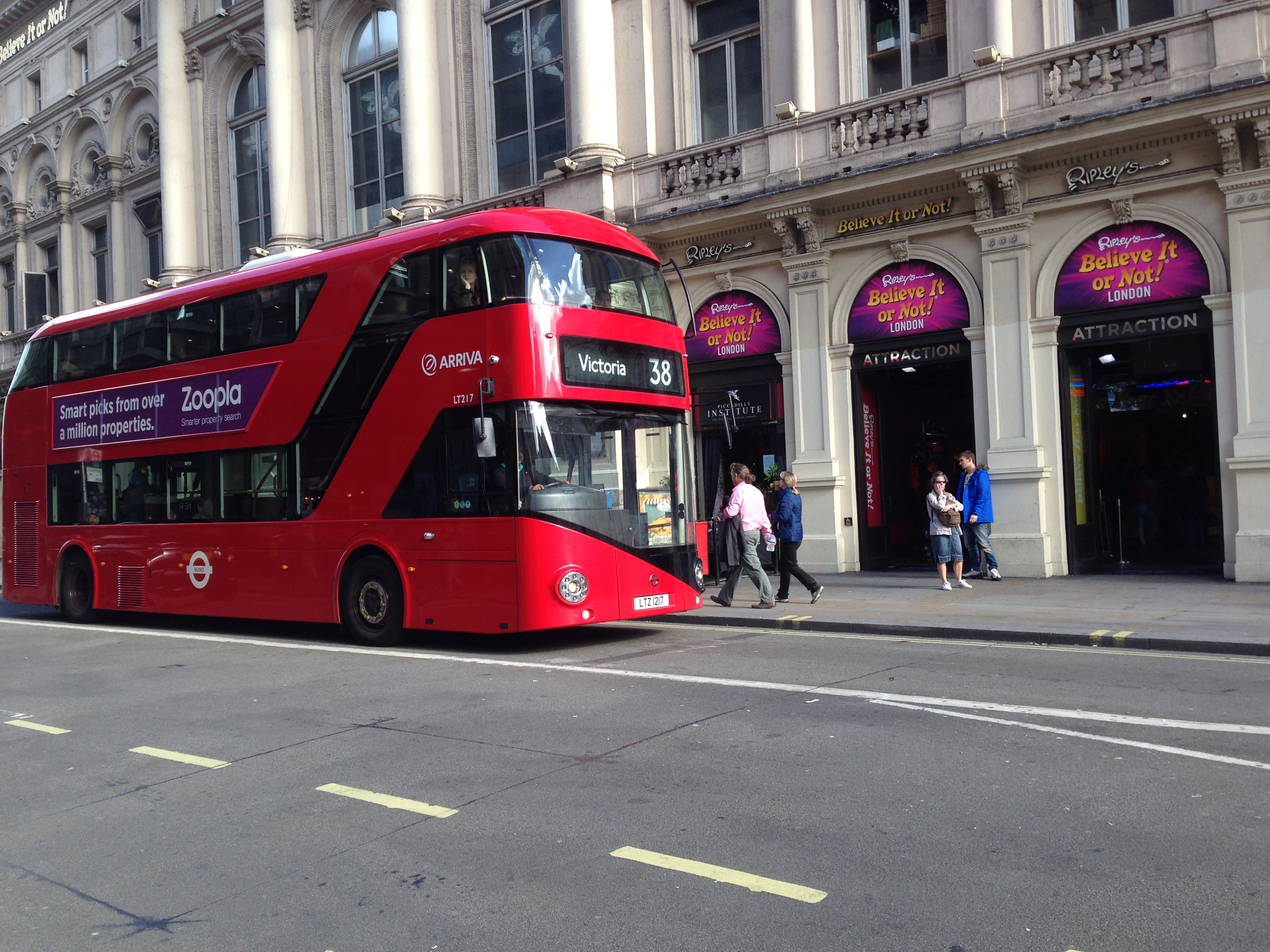
According to TFL, London’s 7,500 red buses carry roughly 6 million passengers each day. Already pretty busy, wouldn’t you say, which might explain why they are putting on extra buses. Still, queues are intensifying at bus stops around the capital. To this end, it wouldn’t hurt to remember that buses have etiquette too. Honestly!

1) First and foremost, please honour the queuing system. Or it might not honour you.

2) Next, while you might not hear, please stand behind the yellow lines for your safety. Do stay out of the road. This is paramount to your safety!

3) Remember, let the passengers off the train first before boarding. Yep, please let the passengers off the bus, as and when possible. During overcrowding passengers tend to dismount from the front and back doors.

4) And do move inside of the bus, even if you don’t do so inside of the tube carriage. Bus passengers might not be as forgiving, since there might not be another following.

5) Finally, mind your manners on the bus, restricting mobile phone conversations and silencing your music. If you don’t you might run the risk of traumatising other passengers.

Case in point: Last week I joined a bus as a last minute option due to train delays, not to mention the inclement weather.  On my way to meet Paul for an evening out, I had called it too close apparently.

Anyhow, just outside of the station, I dashed through the pouring rain in time to board a bus, which went directly to my destination, Victoria Station. Pity it wasn’t a taxi but all the same I was whisked away from the chaos. After making my way to the top of the Double Decker and settling in, suddenly I noticed something was awkward.

For starters, the passengers all looked like hostages, except for one young man. He, my friends, sat on the front seat holding a sleek speaker up to his ear, as if his music wasn’t blaring throughout the bus. He bopped and sang, rather loudly, the entire 30 minute journey.

As you can see, I continue to experience deep trauma over this, which is why I warn against it on any day, certainly on days of overcrowding. The tortured passengers might not be the only ones to experience shock.

So much for that! Just remember, it’s all about getting there safely and sanely, even in the midst of chaos.

Animal Instinct Determines Direction

Ever been lost and though you had either a paper or digital map in hand, you were none the wiser. I have!

For those of you who haven’t and intuitively ‘go west’ no matter the conditions or the diversions, you, my friends, actually have a functional animal instinct. Go figure!

As for the rest of us, we apparently have one too, but not so functional. In fact, ours is dysfunctional.  We must keep moving, however, even if we are way off course.

The experts say that there might be a way, moving forward, to activate this instinct.

In the meantime, check out my latest Huff Post blog to find out more about how sense of direction might be determined in the human brain and what it has to do with the big picture anyhow.

Pay by the Phone Parking, the Secret is Out

Driving in London can be rather hectic, owing to volume of traffic, road works, and various road users (cyclists, motorists, runners), which is why I drive as little as possible.

But since I moved slightly further afield, I find myself wheeling out the car at least once per week, sometimes twice. Who would have ever thought it? Small town girl confidently takes to London’s roads. Recently, two friends commended me on this very thing.

Enough bragging. There is a reason for my madness. The daughter of a retired defensive driving trainer, I happen to like driving and consider it a route to freedom, except when I can’t find a parking meter.

Thank goodness for the ‘pay by phone’ parking meters in Westminster, my main hang- out. Here is how it works:

Once parked, you read the number on the meter or sign, make a phone call and pay, having already registered with the service. For smart phone users (that’s me), it’s even easier. You download the QuickPark app on your phone, register with the service, and after parking simply enter the meter’s number into the app and follow prompts.

In both cases, you usually receive a confirmation text message from the City of Westminster within seconds, unless, of course, something’s gone wrong.

And as with Murphy’s Law, whatever can go wrong will, especially with the app. As with all apps, there are glitches to work out, updates, etc. Still, in the meantime, you can be on your merry way and sort out the immediate hiccup over the telephone.

Better yet, you needn’t rush back to the car to feed the meter with coins to extend your time. All you have to do is extend from the app, send a text or make a quick call. Hassle free, right. Well it used to be until someone tipped off everybody else.

Now I find myself circling around like a vulture, looking for one space, just one. When I can’t find one, I resort to parking in Chelsea, old school style—feeding the meter with coins. The problem here is not the coins. I always have coins when driving. It’s gauging the time. If it is too little, you have to rush back to the car to avoid a ticket, if it is too much, you’ve blown a wad of money.

A few years ago when Westminster introduced ‘pay by phone’ parking meters, I was naively outraged. What about visitors who don’t have a registered credit card, I asked? All I could think of were the times when Paul and I drove around in Edinburgh, Paris, any major city, looking for a parking space. Oh how we felt sweetly relieved when we found one, just one.

The thought of having to find yet another (like finding a needle in a haystack) due to not being registered made me speak up to anyone who would listen.

People will simply not come, I insisted.  This was also said about congestion charges, the £10 per day charge to drive in certain zones in Central London. Never mind!

Anyhow, I was assured that ‘pay by phone’ meters would revolutionise parking in Central London, cutting out the scramble for coins and the race back to meters to avoid parking fines, and so it has.

Pity, the word got out so soon. Anyhow, I know other boroughs offer the option; for instance, Lambeth. But I don’t drive there. Da! Now someone just needs to convince Kensington and Chelsea to get on board, but quietly, please!

Remembering the Sociability of Holiday

Having returned to London after a week in St. Lucia, I can’t help but notice the pull of gravity in the air, on the ground, all around me, whereas in St. Lucia, everyone and everything kind of floated through the days and nights.

At the risk of stereotyping the people of St. Lucia, I will say they have an easygoing air about them. From the children who rode beautiful horses wildly along the beach and often showed off their aquatic skills as well, to the older gentlemen with long white hair and sun baked skin who appeared to mentor the younger men, they were all rather refreshing.

Perhaps it’s something to do with the sea that casts a spell of fleeting sociability on the people, the birds, the insects, etc. One of the locals told me it had to do with living and making a living. But whatever it was, it rubbed off on the holidaymakers, who mingled not only with the locals but also with each other as if they had left their cool culture behind.

Now I don’t mean to suggest that Britons are anti-social at home – on the contrary, if mixed in a room together to do one thing or another. Even if begrudgingly so, they mingle. And plenty are willing to offer a helping hand on the streets if asked but few, if any, go out of their way to start a conversation with a complete stranger just because, unless they are on holiday.

As such, how refreshing it was to meet a man well into his fifties, who had learned to swim recently as part of the rigorous training he took on to sail across the Atlantic in his first boat expedition ever.  He made it and enjoyed it, too! There’s hope for this non-swimmer after all.

Then there was the mother of nine; yes you read correctly, nine, who still manages a successful business. Wow, is all I can say.  And how could I forget the no named, outgoing gentleman who entered the ladies dressing room in the hotel’s departure lounge to blow dry his wife’s hair. And he wasn’t a hairdresser either. Refreshing, right. On the contrary, but never mind. He was on holiday

Anyhow, that’s behaviour for the birds literally. The St. Lucia birds didn’t honour any etiquette to my mind, hanging out in the dinning room as and when they pleased and sneaking food off plates very eagerly. Also, they visited balconies and rooms if the opportunity presented itself.

On one of our outings we ran into an ornithologist of sorts who dispelled any concerns of a bird take over. He did, however, confirm that the birds, one called the bananaquit, had an affinity for sugar, a key ingredient in the local food and drink. Ah ha!

Perhaps that explains the mosquitoes too. I got more bites than I did when I was staying out in a remote village in the Philippines. Though I could have done without the insects in particular, they come with the lush vegetation of the island, gorgeous flora and fauna.  Nothing like seeing bird of paradise in its true habitat!

Still, I’ll take it anywhere I can get it and the sociability, too, of people that is. As for the overly zealous birds, which produced the sounds of wind chimes, quite often after the rain, and the illusive mosquitoes that struck in the night, I am happy to leave them on holiday, even if it does mean giving up the tropical climate.

Back to earth!

DSC03819-800x600-150x150  DSC03857-600x800-150x150

Expat Writer gets Motivated for 2014

Nothing like the eve of a New Year to get us thinking about what’s ahead. Though I’m not big on New Year’s resolutions, I do find beginnings quite motivational.

Anyone who’s ever started a new job, a new relationship, a new hobby, etc. can relate. It’s an opportunity to start afresh and perhaps believe in the ability to achieve that life long dream or just do something that needs to be done.

In any case, instead of writing about New Year’s resolutions, I thought I’d have a look at motivators for the New Year. Certainly in this inclement weather in London, those of us here could use some motivation.

As the sky bursts into tears of madness followed by roaring thunder, it is tempting to curl up in bed and pull the covers over one’s head.  But in a world full of conscientious objectors opposed to listlessness, fat chance!

All around are gadgets, devices, classes, even books that tell us to just do it! No wonder I feel inspired. Thus, as we head for 2014, I’ve shortlisted four ways to get motivated.

1) Topping my list, of course, is the Nike Fuel Band. It so happens that I got one for Christmas and have been wearing it since, figuratively. I do take it off for sleeping and showering, though some people leave it on. It’s apparently waterproof. I’ll find out soon enough when I take it out for a run in London.

In the meantime, however, let me tell you how it works. First, you charge it quite easily as it has a USB port that plugs right into your computer, set it up, (providing personal information including weight and age), set a daily goal, and sync it with your phone. It has an app for the IPhone. Then just wear it!

The fuel band clocks your movement, registering your energy burned in Nike fuel, as well as steps and calories. You will never feel good about being a couch potato again. Never!

So far, I’ve dragged out the Wii, skipped roped nightly, ran around the house and taken stairs instead of lifts on a few occasions to meet my goal. Looks like I’m on my way to gym soon.

2) But first let me tell you about the next on the list– the Run Keeper running app. There are many good running apps out there; Run Keeper just happens to be the one that got my attention. The motivating factor here is twofold – a personal champion while I am running and the data that it registers.

With this app tracking my moves, I don’t miss goals. In fact, I surpass them more often than not.

3) For those who have no interest in sports and little understanding of technology, taking a class is a sure way to get you moving in whatever it is that you want to do.

I’ve been known to take writing workshops, running lessons and chocolate making classes. The benefits here are mixing with people and occasionally competing with them. Nothing like competition for incentive, which is one of the reasons the apps mentioned above both encourage subscribers to participate in the relevant community.

4) Still, there are a few luddites who prefer to be alone. Books are tried and tested motivators for this bunch. Occasionally, I settle down with a good how to book, even if it is on the Kindle, and before long find myself ready to make a move—to juggle, to play chess, to meditate and so on.

This holiday season, I bought my dad a book relevant to something he needs to learn about and need I say more but I will. He now knows more than the rest of us all put together.

Inspiring. Now to go to the gym to rack up some fuel points all I have to do is get past the rain, the dreary feeling inside. Actually all I have to do is look at my fuel band. So I have. And I’m off now to just do it.

Christmas Wrapped Calmly in London

The Monday before Christmas lived up to its nickname, panic Monday, with last minute shoppers crowding the streets, despite the inclement weather.

Though my day got off to a calm start with a drive to Knightsbridge in record time under a dry, though dreary, sky, it catapulted into chaos by lunchtime with a tedious queue at Marks & Spencer’s car park in the pouring rain, the howling wind beating against the windows.

By nightfall, I wanted to cancel our trip to the theatre but nudge as I might, Paul and the folks at the Queen Elizabeth Hall (South Bank Centre), didn’t agree, so off in the scowling weather we went to see Fascinating Aida, a favourite cabaret trio.

The show went on and I am so glad it did. It was an evening of brilliantly scripted yet wild comedy that veered on the serious side now and again.

Founder of Fascinating Aida, Dillie Keene teamed up with Adele Anderson and Liza Pulman for a captivating show, which will run in London until January 10. After a short break, the trio will move on to Derby in February.

One song, though witty, reveals Adele Anderson’s touching story of making a major life change. According to Dillie, it took ten years to write the song, so complex and personal was the subject. That’s commitment if you ask me and certainly skill and talent.

Having seen the group perform at least three times, we weren’t disappointed. If anything, we were uplifted and ready to get on with celebrating Christmas, which included a fantastic celebration with family on Christmas Eve and a spectacular lunch on Christmas Day at Monkey Island, a remote island near Bray on the Thames, which happens to be home of two stunning peacocks.

That’s it, Christmas wrapped. New Year’s is up next. On that note, wishing everyone not only a happy and safe New Year’s celebration but also a wonderful 2014. In any case, do proceed calmly.

Two countries divided by a thing or two

George Bernard Shaw is often credited with saying that “England and America are two countries divided by a common language,” although some sources claim it was Oscar Wilde who coined the phrase and others Winston Churchill.

In any case, I’ve never felt the phrase to be more accurate than now, having recently returned from the US after a two-week visit with family and friends for Thanksgiving.

From the glitz and glamour of New York City to the warmth and hospitality of the Atlanta, rather Albany, Ga., I lived it up and managed to spend a few days in the nation’s capital somewhere in between.

However, with my experiences but a distance memory, I’ve come in for a hazy landing. No wonder I’m being teased about using such words as Jell-O for jelly, and cookie for biscuit. Honestly. And shop assistants are repeatedly asking where I’m from and struggling to understand me.

Let’s just say I’m feeling a tad bit alien. Nonetheless, I’ll stay put and reorient, since I’ve made London my home for nearly sixteen years.

Bridging the language gap, however, is only one aspect of re-entering the capital. There’s switching back to the English coins from the chunk of American change I managed to collect, and the mobile phone,  the credit cards and the chequebook, etc. Who still uses cheques? Never mind, you never know.

And then there is adjusting to the major drop in temperature. Dressed for late spring rather than early winter upon arrival at Heathrow Friday, I felt the chill coming on, not only in the air but also in the state of the airport, even it if is one of the busiest in the world.  Having been described as a zoo, certainly by me, Heathrow and those running it manage to maintain a quintessentially British equanimity, at the worst of times, making the rest of us bonkers.

Lucky for me this time, I arrived at the best of times and breezed right through. But the same time the next day, others weren’t so lucky, as Heathrow practically shut down because of a computer glitch.

Outside of the airport, the atmosphere felt bleak by comparison to the warmth of Atlanta, though the weather has turned frigid in many parts of the US, including NYC and Washington, DC. Anyhow, I soon accepted the bleakness as part of what makes London, London—formal and steely at times yet familiar and enchanting.

Speaking of formality, sometimes it comes with excessive complication. Never mind that the parking app on my phone assured me that I was paid to park today for a few hours, yet my credit card had apparently expired. Furthermore, the customer service people had no sympathy for me and robotically referred me to the automated machine repeatedly.

I know, I know, it happens everywhere. Sure it does but you have to experience it in London to conclude that shouting and pleading are futile. Futile!

As for driving, it comes second nature to me here, even more so than it does in the US. Strangely, my brain thinks driving on the left side of the road makes more sense than driving on the right side, even if it is outdated.

Now for some sleep. Hang on, hang on, at writing of this, it was not even close of business yet, even if it was pitch black outside. Worse yet, it was only around lunchtime EST. Umm, another divider, wouldn’t you know it—time, a significant part of re-entry, absolutely nothing alien about it.

In that case, I’ll catch up on my Bo Peep (rhyming Cockney) later, I mean shut-eye, or shall I say sleep, a word we can all understand. Righty ho.

An Essay on Writing from the Deep

You write in order to change the world … if you alter, even a millimetre, the way people look at reality, then you can change it.’ James Baldwin

When I wrote The Barrenness, I hoped to start a worldwide conversation on the topic of being childfree and childless. I chose fiction not only because I love the genre, but also because I wanted the story to be any and every person’s story, not just mine. I have been delighted with all the attention around the subject, from the media and like-minded writers. Today, I get far more Google Alerts on the topic than I did six years ago. I have even participated in some research on the issue.

Writers write for a number of reasons: to entertain; to seek resolution; to change the world; to start conversations. Malcolm Gladwell, in his mid-October Goodreads chat, cited the last as a motivating factor for writing his best-selling books.

In writing my second novel, The Blindsided Prophet, I’d venture to say that my purpose was closer to Baldwin’s. I didn’t imagine that I could change the entire world, but my goal was to change the way readers think about their beliefs and values — their religion, if you will — at a deeper level. After all, believing something religiously is a cornerstone for any society, and has a profound effect on everyday living.

A few years ago, after supper at a writers’ conference, I had the ear of Jacob Ross, a brilliant and celebrated Afro-Caribbean writer, who is also my mentor. I must have been rambling about a novel I had written with church people at the centre, when Jacob popped the question: Are you deeply religious?

Having grown up as a Southern Baptist, I have always been a person of strong faith, and therefore, could have easily answered affirmatively. But taunted by internal and external misconceptions, I will never forget the rush of thoughts that passed through my head. On the one hand, some thoughts were loaded with a wariness of any and everything holier-than-thou, suggesting that admitting to deep religion would colour me as a writer. These were associated with being referred to as a ‘Holy Roller’ by the well-meaning grandmother of a dear friend.

And on the other hand, other thoughts were laden with feelings of inferiority. I thought of Baldwin’s play The Amen Corner, in which church people behave rather like most people, often hypocritically, though purposefully. Thus, I said ‘no’, quite firmly, and washed my hands of it … or so I thought.

Years later, I still cannot get my answer out of my head, and have long since realised that I wasn’t true to myself in answering Jacob.

Thus, the novel became The Blindsided Prophet, in which, as a writer, I have attempted to explore this basic question on some level, although not necessarily as a Christian, as I think its answer is important for anyone in the big scheme of life, regardless of religious association. And I firmly believe that faith underpins writing rather than dictates or restricts it. Writing is a gift to be used naturally.

Having said this, The Blindsided Prophet has been called ‘dark, psychological fiction’, which contains explicit language, abuse and sex scenes. Nonetheless, it is story about redemption. No matter how broken you are, you can be restored. This is God’s message to the people through the prophet, Isaiah Brown.

In the characters’ language and behaviour, we see their states of mind, as is often the case in fiction, but is equally as important in real life. Great men and women of the Bible had dark pasts. After committing murder, Moses lived in exile, until God liberated him and gave him the opportunity to liberate others: the people of Israel, who had been enslaved in Egypt for generations.

I am by no means comparing my novel to the Bible, but the point is this: the stories of the Bible are demonstrative of issues and struggles that seem larger than life.

Baylor University student and teacher, Alan Noble, in his Citizenship for Confusion blog said as much about the Bible, while writing about misunderstandings in J.D. Salinger’s The Catcher in the Rye: ‘… as Christians, we have a beautiful work of art filled with hard truths, ugly scenes, offensive claims, and moments of darkness at the very centre of our faith!’

In discussing this topic further with some writer friends — one is a Christian, the other is not — I was reminded of Flannery O’Connor’s views on being a Catholic author. She was clear in an article in American, in 1957, that a Christian writer’s work, like that of others, should be judged by its truthfulness and wholeness, not the writer’s faith.

O’Connor’s writing is some of the most haunting I have read, particularly the short story ‘A Good Man is hard to find’, in which an entire family is executed.

I do think she would agree that every book isn’t suitable for every audience. As for my books, they are written as adult fiction, and even so, they aren’t everyone’s cup of tea, but that doesn’t make them purposeless. Admittedly, The Blindsided Prophet may make some people uncomfortable. And some will reject it altogether.

When I first saw the film, Crash, I was shocked out of my comfort zone. I debated with anyone who wanted to, or who didn’t want to, about how dark and disturbing the film was. But soon, I realised that it was in discomfort that I found understanding of the situation.

I couldn’t relate to the movie personally, but having grown up as a black woman in the US, I found the husband-and-wife scene with Thandie Newton and Terrence Howard, in which he watches on helplessly while she is sexually exploited by a police officer, too close for comfort.

My discomfort was such a distraction that, initially, it coloured my ability to see the candour of the movie: the key messages it had to offer on social injustices and hidden racism.

In The Blindsided Prophet, this is a lesson for the character Mae Cook, who builds a fortress around the surface of her beliefs and values, steeped in convention and ceremony. She is challenged to look beyond the surface of those values, and to find out what it means to seek the truth in every situation, not just when it validates her beliefs.

Will this mean changing fundamentally? Not necessarily, but it will mean changing perspective on the fundamentals in order to accept true understanding. Isaiah talks about a New Covenant, meaning a different way of experiencing God, through one’s own freewill and mind.

In encountering this new way of thinking and of being, it is my hope that readers ofThe Blindsided Prophet, regardless of their religious beliefs, will explore the novel as a literary creation, rather than judging it against the writer’s faith, as they would any such theme underpinning a work of fiction.

So getting back to the question of why writers write: for all of the above reasons and many more. But ultimately, to tell a good story, often regardless of their own faith, but sometimes in their faith, or rather their beliefs.

In any case, Malcolm Gladwell talked about the importance of story above all else. My mentor couldn’t agree with him more. As for me, I absolutely love a good story, and when all is said and done, that is what I want to offer readers: a good story, as simple as that.

This is the real reason this writer writes.
 

Travelling in the Company of Locals

From singing solo in a church in Poland to eating live lobster in Japan, I’ve had some unforgettable experiences in the company of locals during my travels.

So what if I didn’t sing like Whitney Houston or believe the meal was really haute cuisine, I had an adventure in both instances that I wouldn’t have experienced were it not for my local hosts. I will never forget the horrified look on the faces of the audience when my croaky voice escaped my ever so pleasant face, and the joyous grin on my Japanese host’s face as I ate from the back of a lobster that was moving its tentacles.  It would have been rude to do otherwise.

Adventure and then some, right? In any case, they are both great stories.  I savour the memories of my travels with Habitat for Humanity International, not just for the work I was doing, but also for the local experiences. I always had a local host from the time I cleared immigrations to the time I returned to the airport. And what a difference it made to acclimatising and experiencing.

Without someone with inside information, I likely would have had a limited adventure, if only because I didn’t speak the language or understand the customs.

In at least one instance, which happened to be with the World Association of Girl Guides and Girl Scouts, having a local hostess was the difference in getting into the country and possibly being sent back to the UK or at least severely delayed.

I’ll never know. Anyhow, the point is that while exploring a foreign place on your own, which Paul and I often do, can be satisfactory; it can be extraordinary in the company of a local.

We’ve been to France more times than I can remember, a favourite place for a number of reasons—the food, the history, the nearness to England—and we always have a great time. This past weekend, however, we had an extraordinary time visiting Paul’s longest standing friend and his wife in Haute-Savoie, situated in the French Alps.

When he was eleven, Paul lived with Jean Pierre’s family as an exchange student. And Jean Pierre, of course, lived with Paul and his family reciprocally. The two men have kept in touch over the years, remarkable within itself.

But as Jean Pierre said, this holiday we ventured into deep France, parts of the country that tourists are unlikely to go, such as villages near a small town called Fessy, where his paternal grandparents lived, and the mountainous areas near Samoens ski resort, where his maternal grandparents lived. Both family homes are still in use.

Near Samoens, we sampled some delicious cider made by a quintessentially French cousin, took in some extraordinary views of the countryside, featuring traditional French homes, and ruins of alluring castles that are not on the tourist track.

Even when we visited Chamonix (where we’ve been at least once before), situated at the foot of Mont Blanc, we made new discoveries—a spot where the mountains, trees, and a small lake co-exist so harmoniously that it looks like a post card; a glacier that has metamorphosed over the years, shrinking in size, but is still breathtakingly beautiful.

The French appetite for life is magnanimous, not to mention their taste for food. Upon arrival, our hosts served up a traditional Swiss meal, Raclette, which is often served in Haute-Savoie, as well. Charcuterie, gherkins, perfectly boiled new potatoes, etc. are served with melted cheese, which happens before your eyes on a special hot plate.

Steeped in tradition, our hosts also dished up my favourite breakfast bread. Voila, croissants. Not to mention, the wine, but not for breakfast, and the much appreciated translations of the speciality dishes we sampled at local restaurants.

Admittedly, we had our first delightful meal before we reached our hosts, and though we found it adventurous to choose food without full knowledge of what we were getting (Paul’s French is limited, you know), we rather relaxed in the knowledge of our hosts and were, therefore, able to branch out, sampling fish that came from the local lake.

The lake. How could I forget Lac Leman, which is Switzerland’s largest land locked body of water but extends well into France? Well remembered it will be, along with our exploration of France in the company of locals.

All there’s left to do now is to brush up on my French. What French? Never mind. I’ll stick with the locals for a bit longer.

Image-26-150x150  Image-34-150x150

Reinventing The Way We Use Good Thoughts

The more I think about  getting rid of bad thoughts, the more I’m convinced that this process is about reinvention, particularly when it comes to fundamentals.

How many times have you reinvented yourself, whether it had to do with career, fashion, family and so on? Sounds flippant to a certain degree, but reinvention is what we do when something becomes passe or no longer useful or beneficial.

Otherwise, we are stuck.

So why not do the same with thinking? In my latest Huffington Post blog, I take a look at moving forward, Getting With the New Programme. Another way to put it is to leave limiting thinking behind.

In doing so, we don’t abandon our fundamentals, rather we understand them more thoroughly, and use them appropriately to spring forward.

Sounds like a bit of reinvention to me. Nothing wrong with that! Happy reinvention.