Category: On Lifestyle

Everyone Is Responsible for Internet Safety
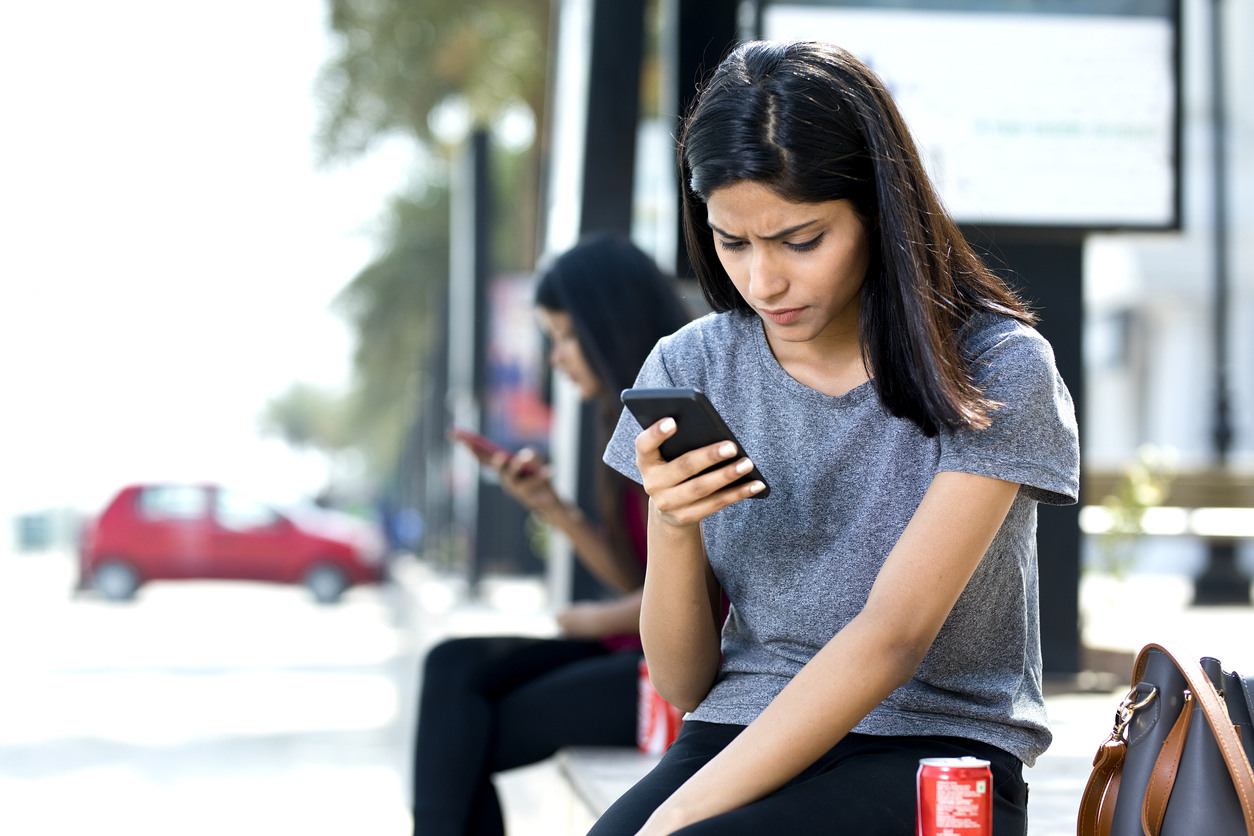
I can’t say enough about Internet Safety, but I am not the only one.  Our most recent podcast features Charlotte Aynsley, e-safety pioneer and expert, to shed some light on the topic. And just the other night I was at an inaugural lecture of a prestigious law professor at King’s College, London, who talked about the importance of Internet Regulation the world over.

But here is the thing, is the message really sinking in, particularly with our teenagers?

After all the Internet is the global hangout, full of wonderful opportunities. What could go wrong? Back in the summer this year, I actually heard a young boy say something to that nature—why would it be on the Internet if it is bad—and according to On Internet Safety guest Aynsley, this child is not the only one who thinks that way. There are many children growing up believing that everything on the Internet is true and right.

Though this might sound naïve, it makes a whole lot of sense to the young person whose internet experience is all positive until it isn’t. In the UK, the legal age for having a social media account is 13, though about 24% of children have accounts when they are 10 and twice as many when they turn 12.

A few years ago, a hysterical acquaintance shared that her underage daughter was asked to undress over the Internet.  But thankfully it was all curtailed before any damage was done. But what if it hadn’t been stopped.

Sadly, everyone’s story doesn’t have the same ending as my acquaintance’s daughter had, and mainly because few teenagers are aware of the emotional and mental impact that sharing sexually explicit images can have on them, their friends or others or that sexting, as it is called, is criminal if you are under the age of 18. 

Admittedly, this issue is not being policed as strictly as it could be, Aynsley points out, but all the same, consequences can lead to emotional and mental unrest and cause dire consequences for the future.

Another top issue that holds problems for teenagers online is body image, which impacts  girls disproportionately. The pressure on them to be perfect and happy all the time, as told to us by our two teen girls in On Being A Teen Girl Now, is magnified on social media.  Through polished selfies, this aim for perfection goes well beyond looks and enters how our teen girls are feeling about themselves.

Hence the rise in mental health issues amongst this age group. The key is education, Aynsley says and points out that transparency and honest and real life role models and experiences are of paramount importance.

And this honesty doesn’t just rest with the teenagers themselves, it has to live with parents and guardians, social media companies, the government, the police, everyone.

Staying safe on the internet, which can be a wonderful place, requires a joint effort to not only be aware of the problems stacked against us, particularly children and teenagers, but also be willing to tackle the issues.

The good news is that our podcast clears up the confusion around these tough topics and offers teenagers and their guardians practical tools and tips on the matters.  Listen to On Internet Safety on Apple podcasts and other platforms were podcasts are played.

Sleep Encounters

Most of us encounter sleep problems from time to time while others have constant problems sleeping. In UIO’s latest podcast On Sleep, guest Dr Nerina Ramlakhan gives three of the most common problems that people encounter with sleep. Also, she offers lots of tips on how to manage the problems.

First, there is sleep initiation, having a problem getting to sleep. This one, I am all too familiar with, particularly when I am wound up about something.  When I was a teen girl, however, it was more or less anticipation of something–whether dreadful or exciting –that kept me up at night. So often I would roll up at school, feeling a bit sleepy, a bit unwell.  In hindsight, I can now explain some of the niggles that I encountered over the years.

Make no mistake about it, I am not saying that sleep replaces medicine but as Dr Ramlakhan points out, we feel so much better when we have had good sleep, both mentally and physically. Not to mention the impact that sleep has on our confidence. It‘s a booster.

Next, there is sleep maintenance, waking up in the middle of the night and staying awake.  Argh!  I have experienced this one, too, probably equally as much as not being able to get off to sleep.

When I was writing novels, in particular, I would often collapse into a deep sleep at the beginning of the night, my brain so loaded with information, and surprise, surprise, after unloading in dreams and so on for a few hours, I would wake up abruptly.

One night I remember, bolting up to a sitting position and staring into space and repeating to myself, why do ghosts sit in chairs in the middle of the night and stare at us, and then there was the time when I was convinced that a conclave of dead writers, Shakespeare included, were trying to tear my door down.  Okay, so most people don’t have such disruption at night, but you get my point.

No wonder Dr. Ramlakhan stresses the importance of winding down such activity long before going to bed and reading something (writing in my case) nice and easy, like a feel good childhood book. The point is not to take all of our troubles, excitement, etc… to bed.

Finally, there is sleeping too much, otherwise known as hypersomnia. Occasionally, I sleep too much when travelling through time zones but according to Dr Ramlakhan, jet lag is not necessarily associated with hypersomnia. The latter is when someone needs to sleep a lot all the time.

All too often, I encounter parents who worry about how much their teenagers sleep. Not to worry, it is true that teenagers need more sleep than adults because of the growth and development they are encountering. It’s sort of an aid to getting it all integrated. But they can overdo it, putting a damper on health altogether, since sleeping too much is not good sleep either.

So whatever sleep issues you find yourself in, the key is to develop good sleep habits, ranging from what you eat, when you eat, how often you nap, when and for how long, and what you take to bed with you so to speak, including your device(s) or not,  and how you prepare your environment for sleep. Nothing wrong with creating a cosy, comfy room that smells good, too.

No wonder I’ve been off to a good slumber here lately. I have left the dead poets and writers out of my bedroom and the ghosts, too. For more tips on how to get your slumber, listen to UIO: On Sleep on Apple podcasts or wherever you listen to podcasts.

Sleep Matters

How exciting it is to be a part of the buzz around the importance of getting enough sleep. Yesterday we released our first ever podcast on the topic of sleep, UIO: On Sleep with Dr Nerina Ramlakhan.

While I am proud of all of our podcasts, I am especially excited about this one as it has the potential to help so many people, teenage girls and the rest of the family, too. It is brimming with hot tips and great advice on how to get good sleep, meaning sleep that refreshes and heals the body.

That’s right, though sleep might not be a cure-all, for all of our troubles, it is an important, natural resource, if you will, for prevention and intervention of physical and emotional health problems.

A few months ago, I tested this view for myself, though unintentionally. The night before I was due to appear as a guest on the Victoria Derbyshire Show, I did not get a wink of sleep.  Not a wink. An old pro, if you will, at media relations, I couldn’t understand what was going on and tried everything I knew to get a few winks in.  I read relaxing books, moved myself from the bed and then to the guest bed, meditated and prayed and all the rest. Still no sleep.

The next morning, I got out of bed as though I had slept. After happily showering and dressing, I made my way to the BBC’s studios and worked really hard to insert myself into the conversation about the rise in teenage girls and young woman having cosmetic procedures and in some instances surgery.  

After all, UIO had just released its Wait Awhile research, which agreed with the findings of so many other surveys. Thus, I wanted to get the word out. Not to mention the pressure I felt from having a publicist just outside of the studio doors.  Gulp! I succeeded.

Anyhow, after the show I met Paul for lunch to celebrate my achievements and shortly before lunch ended, I started to fade a bit, but I fobbed it off, thinking I will just get home and get in the bed. This can’t be that much different to jet lag.

Wrong answer.  By the time I made it home, I felt like I had been hit by a train, beyond feeling nauseated, and barely made it into the house and into to the toilet.  There I found myself in a pool of sweat, feeling deathly ill, though this feeling washed over in about ten minutes.

So glad I was able to get up from the floor and make my way into our bedroom, I thought I would just drop off to sleep.  Wrong answer and when I did get up, I had another problem—a bladder infection.  As I was in no shape to take myself to the doctor and Paul was not home, I made an appointment for the next day and commenced to hydrate myself, even if it meant pain.  Only then dd I realised that I needed to plan to ensure a good night’s sleep, as my body felt wired, like it was never going to sleep again.  Foolishly at lunch, I had a glass of wine—just one!

After deep thought, I decided to go for a run and afterwards come back and have a soothing bath and then read a favourite book. I have several stacked by my bed for times such as the one I was experiencing.

Anyhow, it worked. I relaxed and at last fell asleep and slept the night away.  When I awoke at 7 am, I felt like a new person.  And the bladder infection was history, too. Still I hightailed it to the doctor later that afternoon, just to be sure. Voila! I was well again and all it took was good sleep, having been deprived of a full night of it.

Every situation won’t be as extreme as mine thankfully, but the point is sleeping is integral to well-being. You don’t need to lose a full night’s sleep to feel sleep deprivation.

To this end, Dr Ramlakhan stresses that sleep preparation starts well before bedtime. Surprisingly, what you eat for breakfast could have an impact on whether you get a good night’s sleep or not, as well as what you eat throughout the day. Napping comes into the picture as well and of course, managing use of social devices.

If only I could wind back the hands of time to January to the day before I was due to be a guest on the Victoria Derbyshire Show—I would have been prepared.  Never mind, I am now and thanks to UIO: On Sleep, you can be prepared too.  Listen on Apple podcasts or where ever you listen to podcasts.


The Voice Of Teen Girls Matters

Having a voice matters throughout life and sometimes it matters more when you are a teenager. In our podcast On Being A Teen Girl Now, our two guests stress the importance of being heard and understood, not only in family life but also in politics and other places where decisions are made and life is shaped.

We take their point and continue to work hard to advocate on behalf of teenage girls and bring them resources that lift their individual and collective voice. To this end, we are gearing up for the final three podcasts in our third series, focusing on three hot topics that teenage girls face today.

One of them is sleep. Surprise, surprise, surprise!  I was anyhow until I did my homework and had a wonderful conversation with sleep expert, Dr. Nerina Ramlakhan. Listen to UIO: On Sleep on October 9th for the real deal on what sleep has to do with wellbeing.

Not only does Nerina give us the inside scoop on how a good night’s sleep can address physical health problems, but it can do a a thing or two for mental health too. The mother of a 15-year-old daughter, this expert talks about the importance or role modelling, negotiating and working together for a better night’s sleep.

Next up is UIO: On Internet Safety, out on October 23rd.  As experts ramp up on how to keep our children safe on the internet, we had a brilliant conversation with Charlotte Aynsley, a pioneer in internet safety.

Though the biggest safety issue on the internet has to do with body image for teenage girls, Charlotte underscores lots of other concerns and points out ways for teens and guardians to work together for the overall better experience.

And the last podcast in the series delves into a topic that plagues teenagers disproportionately, particularly girls due to the pressure on them to be perfect all the time, as pointed by our two teen girl guests in On Being a Teen Girl Now.  Yes,  you guessed it: social anxiety.

Though a very common disorder, social anxiety can go undiagnosed for years as it did with our guest, award winning mental health blogger, Claire Eastham, who points out that getting a diagnosis is so key to managing and overcoming. Yet, another opportunity to team up with parents and guardians to share concerns and get the necessary help. UIO: On Social Anxiety is out November 6th.

Stay tuned for exciting upcoming series, and in the meantime, check out On Being A Teen Girl Now wherever you listen to podcasts.


Bucking The Comparison Factor

There are a number of factors that go into having a positive body image, running the gamut from being satisfied with how you look, being happy with who you are, feeling good about yourself and not comparing yourself to others.

It is the latter, the comparison factor, that causes plenty of trouble for a lot of folks. Take me, for example,  I all too often, albeit subconsciously, compare myself to another and find myself deflated rather quickly.  And I am not talking about making blatant physical comparisons; those are easy to stamp out.  Each of us is unique, I get that.

Still, elusive comparisons have a way of creeping in and often when you are feeling most confident.  This morning, I was quite comfy in my own space in my Yoga class with my ungraceful Malasana pose (a squat of sorts)– forgive me if I’ve got the pose wrong; I am new to this–until I say the woman in front of me and the one beside me, etc.  You get my drift.

And that is what happened, I drifted from a relatively body positive person, brimming with confidence to an unstable flat footed girlie of sorts.  And as the instructor had said it was okay to go into child’s pose at any time, I took the opportunity to do so, shying away from Malasana.

It was in these few seconds in child’s pose that I remembered that such comparisons fall well below the conscious and are almost undeniable until they back you against a wall. Though I recovered rather quickly this morning, there have been other times that the feeling of deflation has dominated my person indefinitely, like when I was younger and felt that I didn’t fit in at a social event because my hair, my nose, etc… was different from everyone else’s.

I had a scar for the longest time about athletics because I was not as good as the other girls in my class. Instead of accepting that it just wasn’t my thing, I blamed it all on my body’s lack of ability and anytime athletics came up, well my body slumped, all of me did. Admittedly, it all sounds a bit ridiculous but in the heat of the moment, comparison can shake the most confident person’s body confidence.

Going back nearly seven years, I remember the comparison factor furtively stalking my 50th birthday party, forcing conversations about how one world was more enhanced than another’s either due to children, high powered jobs, husbands, properties, size and shape and so on.  Make no mistake about it, we are not necessarily fickle people and didn’t spend our entire time talking consciously about such things, but caught off guard, the comparison factor had a way of sneaking in and forcing our backs against a wall.

Fortunately, we caught on and looked at the flip side, which is about admiration rather than comparison. Big difference. The minute we talked openly about admiring one another for our achievements, whether deep or peripheral, we returned to a spacious place. What a wonderful celebration!

Now back to my yoga class this morning. Did I ever do the Malasana pose as gracefully as the next person? Not a chance but I did the pose in the best taste that I could master and felt quite satisfied with my feet for it. I thanked them profusely. Gratitude is another key to trouncing the comparison factor.

So the next time, you begin to compare yourself to another and feel deflated physically and mentally, buck up with admiration and a dose of gratitude and embrace the space that you are in. It’s all about celebrating you—body and all. For more tips on maintaining a positive body image, check out Episode 4: Your Body Image Inside Out.


Character Building Podcast: The One to Listen To

If you haven’t already read a life changing book, one that sticks with you forever and a day, you likely will as you age.  Nowadays, however, it doesn’t have to be a book, it can be a podcast! Recently, I was privileged to a conversation that asked after recommended books and podcasts.

Well, have I got news for you. Our recent podcast of UIO: On Character Building could be the one.

Though the podcast is profound, it is refreshing and packed with gems and inspiration that couldn’t have come at a better time than now as the world begins to look at the shift in norms that we’ve taken when it comes to shaping character, who we are, not only as individuals but also as a society.

Our guest for the episode, former Paralympic swimmer Elizabeth Wright, says: “Character is an integral part of life.  In a nutshell, character is who you are, it is those elements inside of you that are a part of you that develop and grow. They can be strengths for people. They can be parts of your personality, parts that you can pull on when times are tough.”

Most of us can relate to this and tend to think of character traits such as grit, determination, courage and so on to aid us in performing a task, be it to achieve or overcome a challenge.  And those performance character traits are important (I should know as I have had to call on them a time or two, especially while mourning the loss of my mother), but they are not the only ones of significance.

Elizabeth says there are four categories for building character if you will:  performance, moral, civic and intellectual.  And the key is striking a balance and knowing your strengths, particularly when facing some of the undue pressures.  

Our Wait Awhile research confirms unprecedented pressures for teenage girls in areas ranging from altering appearance permanently to going further in a sexual relationship than comfortable with, and while these pressures are unlikely to let up anytime soon, On Character Building provides original insight into to the debate and can serve as an invaluable resource to deal with them positively.

For example, if you are being asked to do something that makes you uncomfortable, learn to hone and call on those character strengths that are true to your values, focusing on the moral category. Or do something to change the world yourself if you are civic minded.

Enough said! Take a listen to On Character Building with Elizabeth Wright on iTunes, on our websiteSoundcloud and on various other platforms. 

Here is a quick preview:

Tapping Into Your Values

Most of us inherit values from our parents, families and wider society. But there comes a time when values become up close and personal. We rely on what’s important to us.

Though I can’t pinpoint the moment in my life when I knew what was important to me, my father tells me that even as a kid, some 8 or 9 years of age, I was somewhat charitable. Once I took the pencils and paper that he and my mom had brought for us to school and told the teacher they were for the children who didn’t have any. When the stuff went missing, of course, those unfortunate kids turned out to be my siblings.  I have no recollection of this whatsoever, but Daddy does, as do a a couple of my siblings.

The point is that though my first conscious thoughts of what was important to me in life, likely came when I was a teen, subconsciously my mind was at work much earlier.  Many experts agree that our core values tend to form early on in life and can steer us from the teenage years—often chalked up as a time of discovery and rebellion—to adulthood during the best and worst of times. Thus, knowing what really matters is important.

In our podcast with awarding winning coach Jenny Garrett, UIO: Your Values Inside Out, Jenny points out that it was her strong values that likely saw her through her teenage years. I agree. Often when facing tough decisions or even life changing situations, what it came down to for me was: what really mattered to me, not what everyone else thought mattered.

But let’s face it, what we truly value can get squashed in the minutiae of life. Furthermore, there are more blurred lines today than ever when it comes to values, making it crucial to tap into what matters the most.

Of course, when you’re a teenager, so much seems to matter the most, and it can all feel rather urgent. Upon reflection, I’ve learned over the years that very few things are urgent and there are some steps that can be taken to unmask what is real and what is not.

First, consider Waiting Awhile.  Often letting the intense moment pass sharpens your focus. This sort of tactic might come in handy when under peer pressure to do something that goes against your values. See our Wait Awhile campaign for more tips.

Next, Go with your Gut, not to be confused with the chatter box in your head that says jump on the bandwagon when everyone is bullying the new kid at school. If your gut says give it a miss and welcome the kid, then go with your gut, even if it makes you less popular for a few days.  

Finally, as mentioned in many of our podcasts, find real role models, mentors that inspire you, people whose values are aligned with yours. Learning by association has no substitute and it can work against you, too, so do keep that in mind.

So go ahead teen girls live your best life, knowing what really matters to you.  In some instances that might mean championing a cause, in others it could mean doing something kind for someone you hardly know. In short, it means tapping into your values inside out, regardless of the blurred lines so often above, beyond and around you. It’s all about you being clear.


Support is Pivotal for Achievement

Sadly, I didn’t get to see Cori (Coco) Gauff in action, as we were still in Cannes sunning ourselves and learning French when she made her Wimbledon debut. And when her run ended, I scarcely knew that I was back in England. Still, I caught the excitement, the energy that this dynamic teen girl was creating, not only in London but throughout the world.

This going me thinking about our podcast, On Being A Teen Girl Now.  Of course, not every girl is a sports phenomenon nor does everyone want to be but it seems to me that to be the best at whatever it is that a girl wants to be, it takes a few disciplines—training, practicing, character building, taking it all in and having the drive (the desire) to keep it moving, to name a few.

And according to our two wonderful teenage girl guests of the said podcast, that’s not all. There is something to say about the support of parents and guardians and guides and mentors. When asked what they each needed to make a good transition from being a pre-teen to a teen, both young ladies were quick off the mark with an inspiring response.

For 16-year-old Leah, it had to do with feeling powerful because it was particularly a time of feeling powerless and that not only came from home but from teachers and other adults at her school and for 15-year-old Divaina, it was the support of her parents, particularly her mother, who she was able to talk to about anything. It was having a close relationship where she could express her inner most hopes and desires and feel safe-guarded, no matter what.

To this end, it was wonderful to see the videos and photos of Coco’s parents in the stands cheering her on and the unprecedented support from adults around the world, famous and those not so famous.

How different the world would be, I thought, social media, for starters, if this kind of support was extended to all teen girls. Make no mistake about it, I am not taking anything away from Coco, rather I am giving her a thumbs up for commanding so much respect and gaining enormous support, but I am dreaming of a world, on and offline, where teenage girls can feel this power that Leah spoke of and that Coco no doubt felt and still feels, as well as the support that Divaina needed and still needs unequivocally to be her best in life.

I am not suggesting a perfect world, which is the very idea that teenage girls have told us they’d like to banish.  I agree. But here is what I am thinking: a world in which girls can win and lose, if you will, without the fear of falling out of grace or not living up to someone else’s standards.

This could take a lot of doing but one hot tip that UIO offers is the importance of effective communications. It is a two-way street, Leah reminds. Not only it is important for parents and guardians to offer much needed advise and support, it is important for them to listen to the flipside too. It could make the difference in not only in success or failure but also could have a bearing on a girl’s well-being.

In his play, Cash Cow, writer Oli Forsyth explores what can happen when lines of communications become blurred or cease. His is the story of a tennis prodigy, whose parents push her, even when she doesn’t want to be pushed, and ignore at least one major cry out for help, in the name of winning. Eventually, it all ends in tears.

Though fiction, Cash Cow, raises key points about the importance of the teenager owning the experience. Without having the desire whether it is to become a sports star, a singer, an environmentalist, a teacher, etc, the offerings of support become something other than support.

And as for the power, the feeling of it wanes for the teenager that is and eventually fizzles out for the adults, too.  As both UIO guests touched upon in the podcast, the relationships between teens and the adults in their lives are pivotal, necessary for that powerful feeling to reign, to take you wherever you want to go..

Listen to On Being A Teen Girl Now on iTunes and Soundcloud or wherever you listen to podcasts.


All You Need Is A Healthy Balance: That’s All

Summer often gets us thinking about our bodies, mainly how we look and how we feel as we prepare for sweltering holidays and outdoor sporting activities. It’s all about body image but let’s face it: sometimes body talk, including self-talk, can be quite negative from one extreme to the other.

While lots of progress has been made about body size and shape and the thin is in movement doesn’t have as much of a hold on society as it once did, the embrace excess fat (sometimes to the degree of obesity) movement, in the name of body positivity, is gaining steam.

Make no mistake about it, I am all for embracing your body, thunder thighs, love handles and all. I do mine, even if begrudgingly. The truth is, we are all genetically different, but we are all physiological beings. And to stay healthy, we need to take care of our body. We only have one.  That’s all.

Easier said than done, right!  I should know as I still find it challenging to get it right all the time, but what I have learned over the years about taking care of me is first of all, not to believe the hype on either extreme. Next, it is a fact that obsessing does more harm than good, and finally getting it right all the time is impossible.

They key is to finding a healthy balance that works for you but realising that there are some key elements that we each have to consider in making the best well-being choices:

Food and Drink! We need it to live, no arguments there.  But it is only one part of the story, albeit a big part. To this end, several UIO podcast guests talk about the importance of getting the best diet for you—particularly during the teen years.  In Your Body Inside Out, personal trainer Judit Ressinka offers endless advice on making lifestyle changes that will serve you now and later.

She advises against gimmicks and yo yo dieting and talks about the importance of taking care of your body for the purpose of living life now to the fullest while setting up for the best possible future, too.

Although there is something to be said about the avocado, for example, its healthy benefits and all, Judit points out much to my relief that there is nothing wrong with a good burger or a slice of pizza either, as long as they have the right ingredients. That is key—all ingredients aren’t equal.  And every food is not for everybody.  Find out what serves you and enjoy it.

–Next up is Movement.  We need it as well, but movement is not as transparent as food and drink.  Personal trainer Laura Miles, guest in Your Body Image Inside Out, says that even when negative body image doesn’t manifest itself through eating habits, it tends to crop up in a number of other ways, such as negative self-talk and lethargy.

As such, Laura, who was an obese teenager, says that there is a big difference in truly embracing your body and accepting unhealthiness. In a recent conversation with her, she reiterated the importance of keeping a healthy balance including diet and exercise and just moving around, as well as getting the right amount of sleep, which leads to a third key element for taking care of your body.

–Of course, Sleep is something we know we need, even if we don’t get enough.  I don’t know about you but I am always talking about catching up on my sleep but according to some experts sleep is not something you can catch up on, rather it is something that you manage as best as you can from day-to-day for a number of reasons.

The key one, according to Nicola Morgan, guest in Your Online Wellbeing Inside Out is that sleep informs our health. In short, the brain needs sleep to function.

So, eating according to your health, keeping it moving and managing your z’s will keep you feeling truly body positive whatever shape or size. No need for believing the hype, obsessing to your own detriment or trying to be picture perfect.  Just be healthy. That’s all!

Best Use of Your Device For A Good Holiday

Everybody needs a holiday from time to time and no better time to heed that message than when there is an official public holiday, like today, this Fourth of July holiday in the US. Celebrating independence is a wonderful thing to do and America does it well with family cook outs and fireworks all over the place.

This got me thinking about holidays without cell phones. I remember plenty, though it is not a memory that you will have, teen girls, and you probably can’t even imagine, right?

Bear with and think about it—the benefits you could have.

Nicola Morgan, guest on our podcast: Episode 12: Your Online Wellbeing Inside Out says that if we spend enough time doing the things that serve us both mentally and physically—spending time with family and friends, reading, daydreaming, sleeping, checking out culture near and far and so on—then we would have less time to squander on social media, on our phones.

What a great idea for a holiday. Imagine keeping it in the family, local! I must be joking, right? After all, you might be reading this blog on your phone. So, an entire day off the phone might be more than a reasonable request, however, what about stashing it away in a room or in your handbag, which is stashed away in a room, during the barbecue, the fireworks.

This small act could do wonders for your brain. I know; I have tried it. Never mind the great photos and selfies you could get on your smartphone.  Ask one of the adults in your family for a good ole camera! They will have one somewhere.

Last Fourth of July I was actually in the US and noticed smartphones draped around the room, at the table, everywhere, and in between bites and conversation, people glancing at theirs. That’s when I suggested heeding two of Nicola’s top tips. 1) Put away your phone at mealtimes, even a coffee with a friend, 2) Ban during conversations. Don’t even glance. Gulp!  And the third is switch off and put out of sight 1.5 hours before bedtime.  This is the tip that has served me really well over the last couple of years.

Anyhow, back to the first two tips, not so easy said my niece, Nikki, who uses her phone for everything and she is not even a teen girl, but she did pledge to give it a go, start putting the phone away for thirty minutes at a time. So, mon cherie (I am in France this holiday) how is it going?

As for me, I continue to make progress. Can’t say I have had an entire day without my beloved phone. After all it is my camera but it stays in my sac a main (handbag) or wherever it is during meals and conversations, except for when I need to take a photo of the cuisine. And if I am honest with myself, these tips have served me really well and those around me, too.

It’s all about striking the right balance and getting a much deserved holiday. For more tips on online wellbeing, listen to our special episode on our website, iTunes or where ever you listen to podcasts. Stay tuned!